Concrete Driveway Installation in Naples, FL: What Homeowners Should Know Before Starting
A concrete driveway is one of the most practical upgrades a homeowner can make, especially in Naples, FL, where curb appeal, property access, drainage, and long-term durability all matter. Whether you are replacing an older driveway, building a new home, or improving a residential property, the quality of the installation will have a direct impact on how the driveway performs over time.
Concrete driveway installation is not just about pouring a slab. A reliable driveway depends on proper grading, base preparation, thickness, reinforcement, finishing, curing, and drainage planning. If any of these steps are rushed or overlooked, the driveway may crack, settle, hold water, or wear down earlier than expected.
This guide explains what homeowners should know before starting a concrete driveway project in Naples, including cost factors, installation steps, finish options, maintenance expectations, and common mistakes to avoid.
Why Concrete Driveways Are a Popular Choice in Naples
Concrete is a strong choice for residential driveways because it offers a clean appearance, long service life, and practical performance for daily vehicle use. In Naples and surrounding Southwest Florida communities, many homeowners choose concrete because it works well with a wide range of home styles and can be finished in several ways.
A standard concrete driveway can provide a simple, clean surface for everyday use. Decorative options like stamped concrete, colored concrete, or exposed aggregate can add more visual interest for homeowners who want the driveway to complement the rest of the property.
Concrete is also a good fit for properties that need a durable surface for cars, SUVs, golf carts, work vehicles, or guest parking. When installed correctly, it can handle regular use with relatively low maintenance.
For homeowners still comparing driveway materials, Regency Construction Group’s concrete driveway guide can help explain how concrete performs compared with other options.
What Affects Concrete Driveway Installation in Naples?
Every driveway project is different. Even if two properties have similar square footage, the installation requirements may not be the same. The final scope depends on site conditions, access, drainage, layout, soil stability, finish selection, and how the driveway will be used.
Site Conditions
Site conditions are one of the biggest factors in driveway installation. A contractor needs to evaluate the existing surface, soil, slope, and surrounding property before work begins.
Common site considerations include:
- Existing driveway removal
- Uneven or soft ground
- Drainage direction
- Tree roots or landscape borders
- Access for concrete trucks and equipment
- Elevation changes near the garage or street
A driveway built on poorly prepared ground may crack or settle even if the concrete itself is high quality. This is why the preparation stage is just as important as the pour.
Drainage and Grading
Drainage is especially important for concrete driveways in Florida. Heavy rain can expose poor grading quickly. If water sits on the driveway or runs toward the home, it can create long-term problems.
Proper grading helps direct water away from the garage, foundation, and high-traffic areas. In some cases, a contractor may recommend slight slope adjustments, drainage channels, or additional planning around nearby walkways and landscaping.
A driveway should never be treated as a flat surface without considering how water will move across it.
Driveway Size and Layout
The size and shape of the driveway affect cost, installation time, and long-term function.
A simple straight driveway is usually more efficient to install than a curved driveway or one with multiple parking areas. Larger driveways may require more planning around control joints, reinforcement, and finishing consistency.
Homeowners should think about how the driveway will be used every day. A driveway that works well on paper may feel tight if it does not allow enough room for turning, guest parking, or multiple vehicles.
Concrete Driveway Installation Process
Understanding the installation process helps homeowners know what to expect and what questions to ask before hiring a contractor.
1. Site Evaluation and Planning
The project should begin with a site review. During this step, the contractor evaluates the current driveway area, property access, drainage needs, and project goals.
This stage helps determine:
- Driveway dimensions
- Required excavation depth
- Base preparation needs
- Concrete thickness
- Reinforcement recommendations
- Finish options
- Timeline and access limitations
A clear plan helps prevent surprises once work begins.
2. Removal of Existing Surface
If the property already has an old driveway, the existing surface may need to be removed. This could include old concrete, asphalt, pavers, gravel, or damaged material.
Removal allows the contractor to inspect the base underneath and correct any issues before the new driveway is installed.
3. Excavation and Base Preparation
After removal, the driveway area is excavated to the proper depth. The contractor then prepares the base with compacted material, often gravel or a suitable base layer depending on the site.
Base preparation helps support the concrete and reduce movement. A strong base also improves drainage and helps prevent settling.
This is one of the most important steps in the entire installation process.
4. Forming the Driveway
Forms are installed to define the driveway’s shape, edges, slope, and final dimensions. Good formwork helps create clean edges and consistent layout.
This step also helps control the final appearance of the driveway and ensures the concrete is placed where it should be.
5. Reinforcement Placement
Depending on the project, reinforcement may be added before the concrete is poured. Reinforcement can include wire mesh, rebar, or fiber reinforcement.
Reinforcement does not prevent all cracking, but it helps improve strength and control movement. It is especially useful for driveways that will support heavier vehicles or experience frequent use.
6. Pouring and Finishing
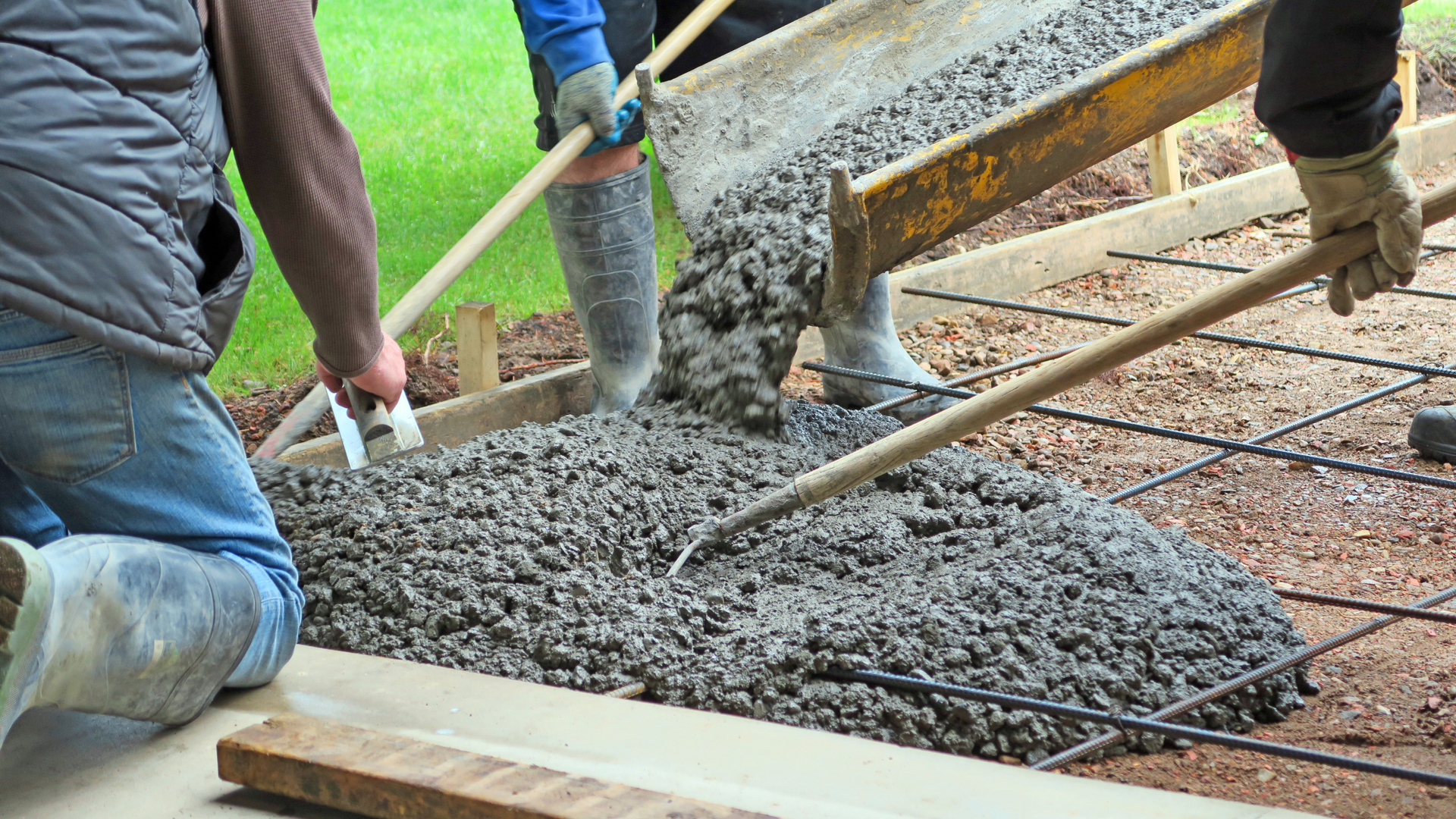
Once the base, forms, and reinforcement are ready, the concrete is poured. The crew spreads, levels, and finishes the concrete to the selected surface texture.
Common driveway finishes include broom finish, smooth finish, exposed aggregate, and decorative stamped finishes.
7. Control Joints
Control joints are placed or cut into the concrete to help manage cracking. Concrete naturally expands, contracts, and cures over time. Control joints guide where movement occurs so cracks are less likely to appear randomly across the surface.
Proper joint spacing is an important part of professional concrete driveway installation.
8. Curing
Concrete needs time to cure properly. While the surface may look dry quickly, the slab continues gaining strength over time.
Homeowners should follow contractor recommendations before walking, parking, or driving on the new driveway. Driving on concrete too early can damage the surface or affect long-term performance.
How Thick Should a Concrete Driveway Be?
For most residential driveways, 4 inches of concrete is commonly used for standard passenger vehicles. However, heavier vehicles or special use areas may require a thicker slab.
| Driveway Use | Recommended Thickness |
|---|---|
| Standard cars and SUVs | 4 inches |
| Pickup trucks and heavier residential use | 5 inches |
| RVs, trailers, or frequent heavy loads | 5 to 6 inches |
| Commercial or high-traffic use | 6 inches or more |
Thickness should not be chosen on its own. A 4-inch slab over a well-prepared base can perform better than a thicker slab over unstable ground.
For a deeper explanation of slab depth and load support, Regency Construction Group’s concrete driveway thickness guide is a helpful supporting resource.
Concrete Driveway Cost in Naples, FL
Concrete driveway cost depends on the size of the driveway, existing conditions, finish selection, thickness, reinforcement, and preparation work required.
While every project needs a site-specific estimate, homeowners can use general pricing ranges to understand what affects the budget.
| Driveway Type | Estimated Cost Range |
|---|---|
| Standard broom finish concrete driveway | Lower to mid-range |
| Reinforced concrete driveway | Mid-range |
| Decorative or stamped concrete driveway | Higher range |
| Large or complex driveway layout | Varies based on scope |
Cost Factors to Consider
Several items can increase or decrease the total project cost:
- Demolition and removal of existing concrete
- Excavation and grading
- Base material and compaction
- Reinforcement
- Concrete thickness
- Finish type
- Drainage solutions
- Site access
- Permit or local requirements, if applicable
A lower estimate may not always include the same level of preparation, reinforcement, or cleanup. Homeowners should compare scope, not just price.
For homeowners focused specifically on budgeting, Regency Construction Group’s concrete driveway cost guide explains the major pricing factors in more detail.

Best Concrete Driveway Finish Options
The finish affects both appearance and function. The right choice depends on the look you want, the level of traction needed, and how much maintenance you are comfortable with.
Broom Finish
A broom finish is one of the most common driveway finishes. After the concrete is leveled, a broom is pulled across the surface to create a light texture.
This option provides:
- Good traction
- Clean appearance
- Practical maintenance
- Cost-effective installation
It is a strong choice for homeowners who want a simple and durable driveway surface.
Smooth Finish
A smooth finish creates a cleaner and more refined surface, but it may not provide as much traction when wet. For driveway use, a fully smooth finish is usually less practical than a lightly textured surface.
Exposed Aggregate
Exposed aggregate reveals small stones within the concrete surface. It offers more texture and a decorative look while still being durable.
This option can work well for homeowners who want a driveway with more character without choosing stamped patterns.
Stamped or Colored Concrete
Stamped and colored concrete can create a more custom look. It may resemble stone, tile, or other decorative patterns.
This option typically costs more because it requires additional labor, coloring materials, and finishing skill. It may also need more regular sealing to maintain its appearance.
Concrete Driveway Maintenance
Concrete driveways are relatively low maintenance, but they still benefit from proper care. Maintenance helps protect the surface, reduce staining, and extend service life.
Recommended Maintenance Steps
- Keep the surface clean
- Remove leaves, dirt, and debris
- Rinse off spills when possible
- Seal the driveway as recommended
- Repair small cracks early
- Avoid placing extremely heavy loads on areas not designed for them
In Naples, homeowners should also pay attention to drainage and organic debris from landscaping. Leaves, soil, and standing water can affect the appearance of the surface over time.
Common Mistakes Homeowners Should Avoid
A concrete driveway is a long-term investment. Avoiding common mistakes can help prevent unnecessary repair costs later.
Choosing Based Only on Price
The lowest quote may leave out important steps like proper base preparation, reinforcement, or drainage work. A driveway that costs less upfront may become more expensive if it cracks, settles, or needs early replacement.
Ignoring Drainage
Drainage should be planned before concrete is poured. Once the driveway is installed, drainage problems become harder and more expensive to correct.
Skipping Reinforcement When It Is Needed
Not every driveway requires the same reinforcement, but some projects benefit from added support. This is especially true for heavier vehicles, larger driveways, or areas with unstable conditions.
Driving on the Concrete Too Soon
Concrete needs time to cure. Using the driveway too early can damage the surface and weaken the final result.
Choosing the Wrong Finish
A decorative finish can improve appearance, but it may not be the best choice for every homeowner. Consider maintenance, traction, budget, and surrounding property design before selecting a finish.
When Should You Replace a Concrete Driveway?
Some driveway issues can be repaired, but others may point to the need for replacement.
Signs Replacement May Be the Better Option
- Wide cracks throughout the slab
- Uneven sections or sinking
- Drainage problems
- Severe surface deterioration
- Multiple failed repairs
- Driveway no longer fits property needs
If the base has failed or the slab has widespread movement, repairs may only provide a temporary fix. In these cases, replacement is often the better long-term solution.
Concrete Driveway Installation Timeline
Project timelines vary depending on the size and complexity of the driveway. Weather, site access, demolition, and curing requirements can also affect the schedule.
| Project Stage | Typical Timeframe |
|---|---|
| Site preparation and demolition | 1 to 2 days |
| Forming and base preparation | 1 day |
| Pouring and finishing | 1 day |
| Initial curing | Several days |
| Full curing strength | About 28 days |
Many residential driveway projects can be completed within several working days, but homeowners should allow proper curing time before regular vehicle use.
Questions to Ask Before Hiring a Concrete Driveway Contractor
Before choosing a contractor, ask questions that help you understand their process and level of detail.
Helpful questions include:
- How will you prepare the base?
- What thickness do you recommend for my driveway?
- Will reinforcement be used?
- How will drainage be handled?
- What finish options are best for this property?
- How long before we can drive on the new concrete?
- What is included in the estimate?
- Are you licensed and insured?
The answers should be clear and specific to your property, not generic.
Why Work With Regency Construction Group?
Regency Construction Group provides concrete driveway installation in Naples, FL and surrounding areas throughout Southwest Florida. The team works with homeowners, builders, and property owners who want organized project management, clear communication, and professional concrete work.
From the first site review to final finishing, Regency Construction Group focuses on proper preparation, accurate layout, and practical recommendations based on how the driveway will be used.
If you are planning a new driveway or replacing an existing one, you can request an estimate through Regency Construction Group’s concrete driveway installation services page.
Final Thoughts
Concrete driveway installation in Naples, FL requires more than choosing a finish and pouring concrete. A long-lasting driveway depends on proper planning, site preparation, drainage, thickness, reinforcement, finishing, and curing.
Homeowners who understand these factors can ask better questions, compare estimates more accurately, and make decisions that support long-term performance.
If you are ready to discuss your project, contact Regency Construction Group to schedule a concrete driveway estimate and review the best options for your property.