What Is the Best Thickness for a Concrete Driveway?
Concrete driveway thickness plays a major role in long-term durability, crack resistance, and how well the surface handles vehicle weight over time. While many homeowners focus on finish or appearance, the actual slab thickness underneath is one of the most important structural decisions in the entire project.
A driveway that is too thin may crack prematurely, shift under pressure, or fail much sooner than expected. On the other hand, pouring thicker concrete than necessary can increase project cost without providing meaningful additional benefit for a standard residential property.
This guide explains the recommended concrete driveway thickness for different situations, what affects those recommendations, and how homeowners can avoid common installation mistakes.
Standard Concrete Driveway Thickness
For most residential homes, the standard concrete driveway thickness is:
| Driveway Type | Recommended Thickness |
|---|---|
| Standard Residential Vehicles | 4 inches |
| Heavy Trucks or RVs | 5–6 inches |
| Commercial or High-Traffic Areas | 6+ inches |
A properly installed 4-inch driveway is sufficient for most homes with:
- Passenger vehicles
- SUVs
- Light pickup trucks
However, thickness recommendations change depending on:
- Vehicle weight
- Soil conditions
- Drainage
- Climate
- Frequency of use
For homeowners planning a full installation or replacement project, our
concrete driveway guide explains how thickness fits into overall driveway performance and lifespan.
Why Concrete Thickness Matters
Concrete thickness directly affects how the driveway distributes weight and resists structural stress.
A Thicker Driveway Helps:
- Reduce major cracking
- Improve load support
- Prevent settling and shifting
- Increase long-term durability
- Handle heavier vehicles more effectively
A driveway that is too thin may develop:
- Surface cracks
- Edge cracking
- Uneven settling
- Structural failure under repeated weight
Thickness alone does not guarantee durability, but it is one of the most important parts of a properly built driveway system.
Is 4 Inches Thick Enough for a Residential Driveway?
In many cases, yes.
A properly installed 4-inch concrete driveway performs well for standard residential use when combined with:
- Proper base preparation
- Reinforcement
- Drainage planning
- Correct concrete mix
Suitable Vehicles for a 4-Inch Driveway
- Sedans
- SUVs
- Minivans
- Standard pickup trucks
The majority of residential driveways across the country are installed at this thickness.
However, problems occur when:
- The base is poorly compacted
- Heavy vehicles are parked regularly
- Water drains improperly
- Reinforcement is skipped
When Should a Driveway Be 5 or 6 Inches Thick?
Thicker concrete is recommended when the driveway will support heavier loads.
Situations That Require Thicker Concrete
- RV parking
- Work trucks
- Large trailers
- Commercial vehicles
- Multi-vehicle parking areas
Recommended Thickness for Heavy Loads
| Vehicle Type | Recommended Thickness |
|---|---|
| Standard Residential Vehicles | 4 inches |
| RVs and Heavy Trucks | 5 inches |
| Commercial or Constant Heavy Traffic | 6 inches |
Increasing thickness significantly improves load distribution and reduces stress-related cracking.
Base Preparation Matters as Much as Thickness
One of the biggest misconceptions about concrete driveways is that thickness alone determines durability.
In reality, poor base preparation causes many driveway failures.
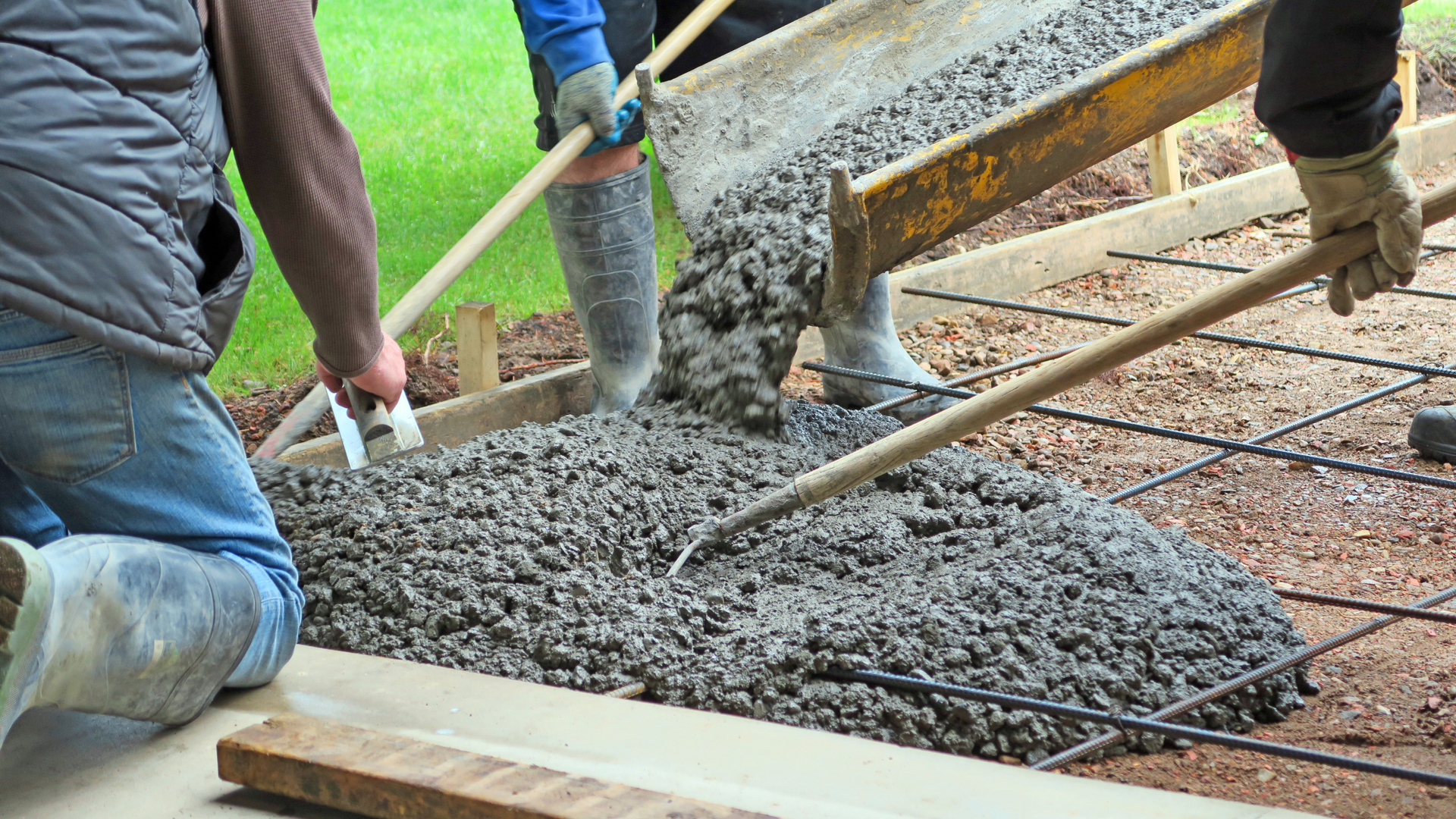
Proper Base Preparation Includes:
- Excavation to proper depth
- Compacted gravel base
- Stable soil conditions
- Proper drainage slope
A 6-inch driveway on unstable soil may fail faster than a properly installed 4-inch driveway on a strong base.
This is why experienced contractors focus heavily on subgrade preparation before pouring concrete.
Does Reinforcement Affect Thickness Requirements?
Reinforcement improves structural performance but does not replace proper thickness.
Common Reinforcement Options
| Reinforcement Type | Purpose |
|---|---|
| Wire Mesh | Helps control minor cracking |
| Steel Rebar | Adds structural strength |
| Fiber Reinforcement | Improves crack resistance |
Reinforcement helps:
- Minimize crack spreading
- Improve structural stability
- Reduce movement over time
However, reinforcement works best when combined with the correct slab thickness and proper base preparation.
What Happens If a Driveway Is Too Thin?
Driveways that are poured too thin often experience issues much earlier than expected.
Common Problems With Thin Concrete
- Cracking under vehicle weight
- Surface flaking
- Edge deterioration
- Uneven settling
- Reduced lifespan
Thin slabs are especially vulnerable near driveway edges where stress concentration is highest.
Once structural cracking begins, repairs are often temporary rather than permanent.
How Soil Conditions Affect Concrete Thickness
Soil quality has a major impact on driveway performance.
Problematic Soil Conditions
- Expansive clay soil
- Loose fill material
- Poor drainage areas
- Soft or unstable ground
In these situations, contractors may recommend:
- Additional excavation
- Thicker gravel base
- Increased slab thickness
- Extra reinforcement
Ignoring soil conditions can lead to:
- Cracking
- Sinking
- Uneven surfaces
An experienced concrete driveway contractor evaluates soil conditions before determining the appropriate driveway thickness.
Concrete Thickness vs Cost
Thicker driveways cost more because they require:
- More concrete material
- Additional labor
- Larger excavation depth
Average Cost Impact
| Thickness | Estimated Cost Increase |
|---|---|
| 4 inches | Standard pricing |
| 5 inches | 10–20% |
| 6 inches | 20–35% |
However, thicker concrete may reduce future repair costs when heavy vehicles are involved.
For homeowners comparing pricing and thickness together, our concrete driveway cost guide explains how slab depth affects overall installation cost.
How Control Joints Help Prevent Cracking
Even properly installed concrete can crack over time. Control joints help guide where those cracks occur.
Control Joints Are Designed To:
- Reduce random cracking
- Allow controlled movement
- Improve appearance over time
Control joints are typically spaced based on:
- Slab thickness
- Driveway dimensions
- Climate conditions
Without proper joint placement, cracks may form unpredictably across the surface.
Does Climate Affect Driveway Thickness?
Climate can influence both installation methods and slab requirements.
Cold Climate Considerations
In colder climates, freeze-thaw cycles create expansion and contraction within the ground.
This can lead to:
- Surface cracking
- Frost heaving
- Movement underneath the slab
Additional base preparation and reinforcement are often recommended in these areas.
Hot Climate Considerations
In hotter regions, concrete must resist:
- Heat expansion
- Surface drying
- Heavy weight on softened subgrade
Proper curing becomes especially important during warm-weather installations.
Signs Your Existing Driveway May Be Too Thin
Older driveways sometimes fail because they were originally poured below recommended thickness standards.
Common Warning Signs
- Wide structural cracks
- Cracking near edges
- Surface movement or settling
- Tire depressions
- Frequent repair needs
In many cases, replacing the driveway is more cost-effective than repeated patching.
Can You Add Concrete Over an Existing Driveway?
Concrete overlays are sometimes possible, but only if the existing slab is structurally stable.
Overlays May Work When:
- Cracks are minor
- The base remains stable
- There is no major settling
However, overlays do not solve underlying structural issues.
If the original driveway is too thin or unstable, a full replacement is usually the better long-term solution.
Choosing the Right Thickness for Your Property
The ideal driveway thickness depends on:
- Vehicle type
- Usage frequency
- Soil condition
- Drainage quality
- Long-term expectations
Homeowners often underestimate how much vehicle weight and soil movement affect driveway performance over time.
A proper evaluation helps determine whether standard residential thickness is enough or if additional reinforcement and depth are necessary.
Get a Concrete Driveway Quote from Regency Construction Group
Concrete driveway thickness should be based on how the driveway will actually be used, not just minimum standards.
Regency Construction Group works with homeowners to evaluate soil conditions, drainage, reinforcement needs, and expected vehicle load before recommending the right driveway thickness for the property.
You can learn more about available options or request a quote through our concrete driveway services page.
Final Thoughts
Concrete driveway thickness has a direct impact on durability, structural performance, and long-term maintenance costs. While 4 inches is suitable for most residential properties, heavier vehicles and unstable soil conditions often require thicker slabs and additional reinforcement.
The most reliable driveways are built with the right combination of:
- Proper thickness
- Strong base preparation
- Reinforcement
- Drainage planning
Understanding these factors helps homeowners make informed decisions and avoid premature driveway problems later on.