Concrete Patio Ideas for Southwest Florida Outdoor Living
In Southwest Florida, the backyard is not an afterthought. It is where a huge part of daily life happens, from morning coffee by the pool to evenings around a fire feature with the screen enclosure keeping the bugs out. If you are starting to picture a real outdoor living space rather than a plain slab out back, concrete is where most great Naples patios begin. It is versatile, durable in our climate, and far more design flexible than most homeowners expect.
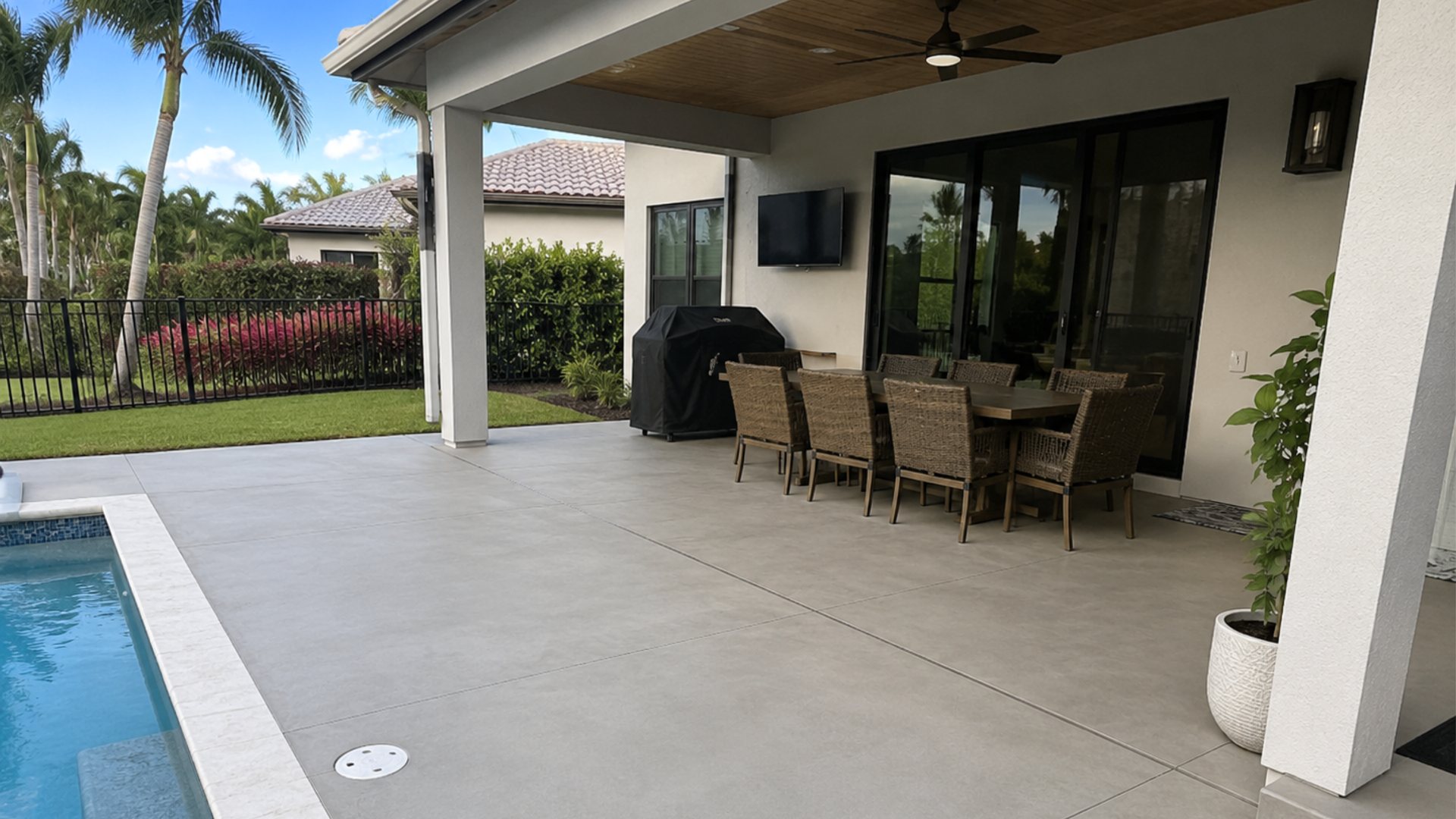
This guide walks through concrete patio ideas built specifically for the way we live down here. We will cover finishes and colors, smart layouts for patios and pool decks, how to design around the heat and rain, and what to think about before you pour. The goal is to help you shape a clear vision for your space, so that when you are ready to build, you already know what you want and why.
Why Concrete Anchors Outdoor Living in Naples and Collier County
Before the design ideas, it helps to understand why concrete is the default surface for outdoor living across Southwest Florida.
It handles our climate
Poured correctly, concrete stands up to intense sun, heavy summer rain, and the humidity that runs year round here. It does not rot like wood decking, and it does not shift and separate the way loose pavers can over time. It is one continuous, solid surface.
It is genuinely flexible in appearance
This is the part most people underestimate. Modern decorative concrete can mimic natural stone, brick, or wood plank, take on almost any color, and carry patterns and borders that tie the whole space together. A patio does not have to look like a sidewalk. It can look like flagstone, travertine, or a custom design that exists nowhere else.
And it works as a single system with everything around it
Your patio, concrete pool deck, walkways, and even the slab under an outdoor kitchen can be poured and finished to match, creating a cohesive outdoor room rather than a patchwork of surfaces. That is why so many projects across the areas we serve across Southwest Florida start with concrete as the foundation of the whole design. Explore the full range of options on our concrete patios and outdoor designs service page.

Design Ideas: Concrete Patio Finishes for a Florida Backyard
The finish is where a concrete patio stops looking like a driveway and starts looking like living space. Here are the finishes worth knowing, and where each one shines.
Stamped concrete is the headliner. Wet concrete is pressed with textured mats to replicate stone, slate, brick, or wood plank, then colored to match. It gives you a high end look in one continuous pour, with far fewer joints than pavers. It is the most popular decorative choice for Southwest Florida patios and pool decks for good reason.
Colored concrete uses integral color mixed through the whole slab or surface treatments applied after the pour. Lighter earth tones are especially smart here because they stay cooler underfoot in direct sun than dark shades do.
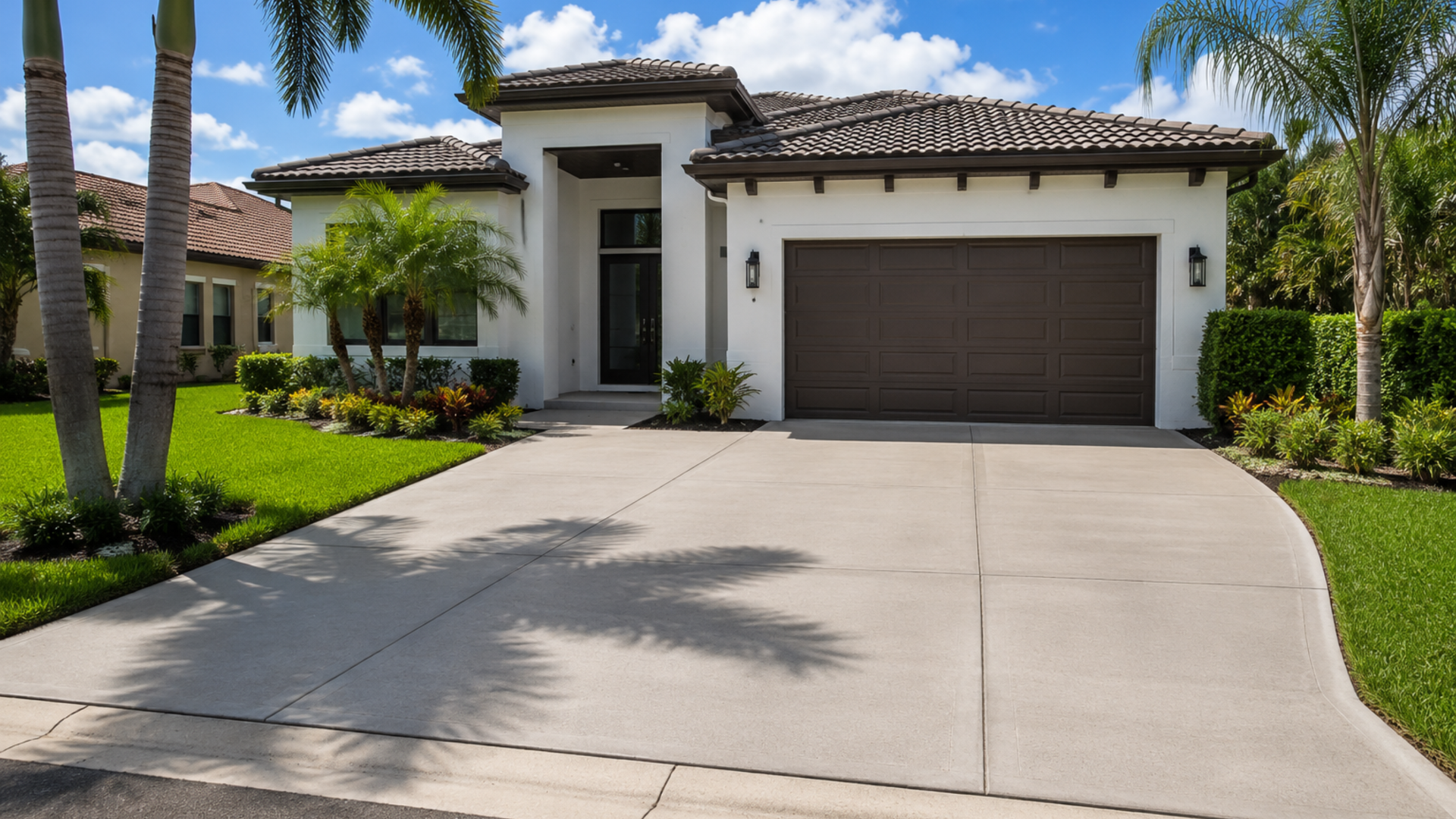
Broom finish is the classic textured surface, understated and highly slip resistant, which makes it a practical, budget friendly choice around pools and on walkways.
Exposed aggregate
reveals the natural stone within the concrete for a textured, decorative surface that hides wear well and grips underfoot naturally.
| Finish | Look | Slip Resistance | Best For |
|---|---|---|---|
| Stamped concrete | Stone, brick, or wood plank | Good with texture | Feature patios, pool decks, cohesive designs |
| Colored concrete | Custom earth tones and hues | Depends on finish | Matching a home's palette, cooler light tones |
| Broom finish | Simple, textured, classic | Very good | Budget builds, walkways, wet pool areas |
| Exposed aggregate | Natural pebbled texture | Very good | High traffic areas, hiding wear, grip |
Many of the most striking patios combine finishes, for example a stamped feature area bordered by a contrasting band. Our stamped and colored concrete work covers the full range of decorative options.
Laying Out the Space: Patios, Pool Decks, and Walkways in Collier County
A great outdoor living area is about flow as much as finish. The best layouts connect spaces so the yard feels like one room, not several disconnected slabs.
Start with zones. Think about how you actually use the yard: a dining area near the kitchen door, a lounge area with a view, a sunning zone by the pool. Concrete lets you define these with subtle changes in color, pattern, or a border, so each zone reads as its own space while still belonging to the whole.
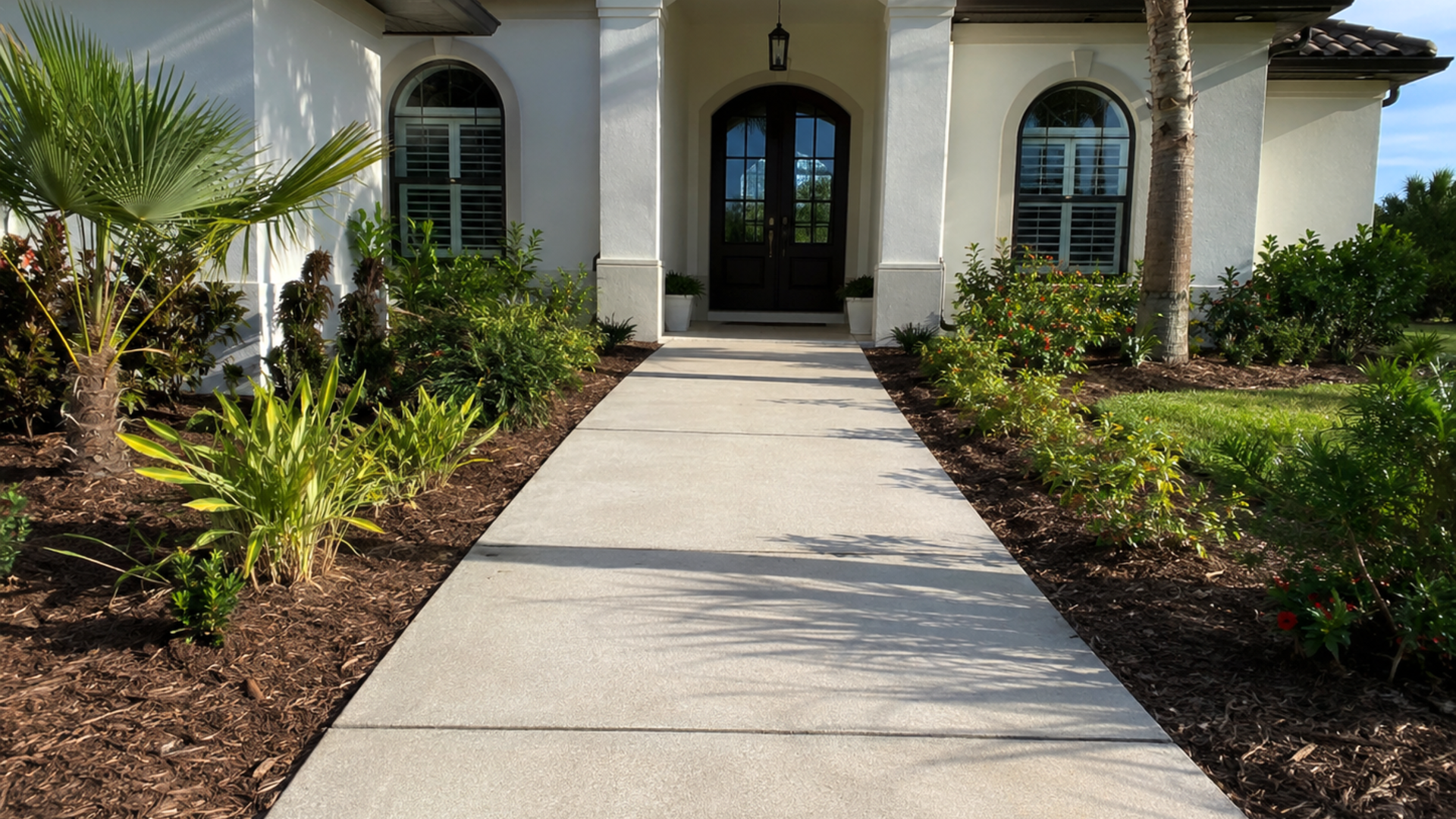
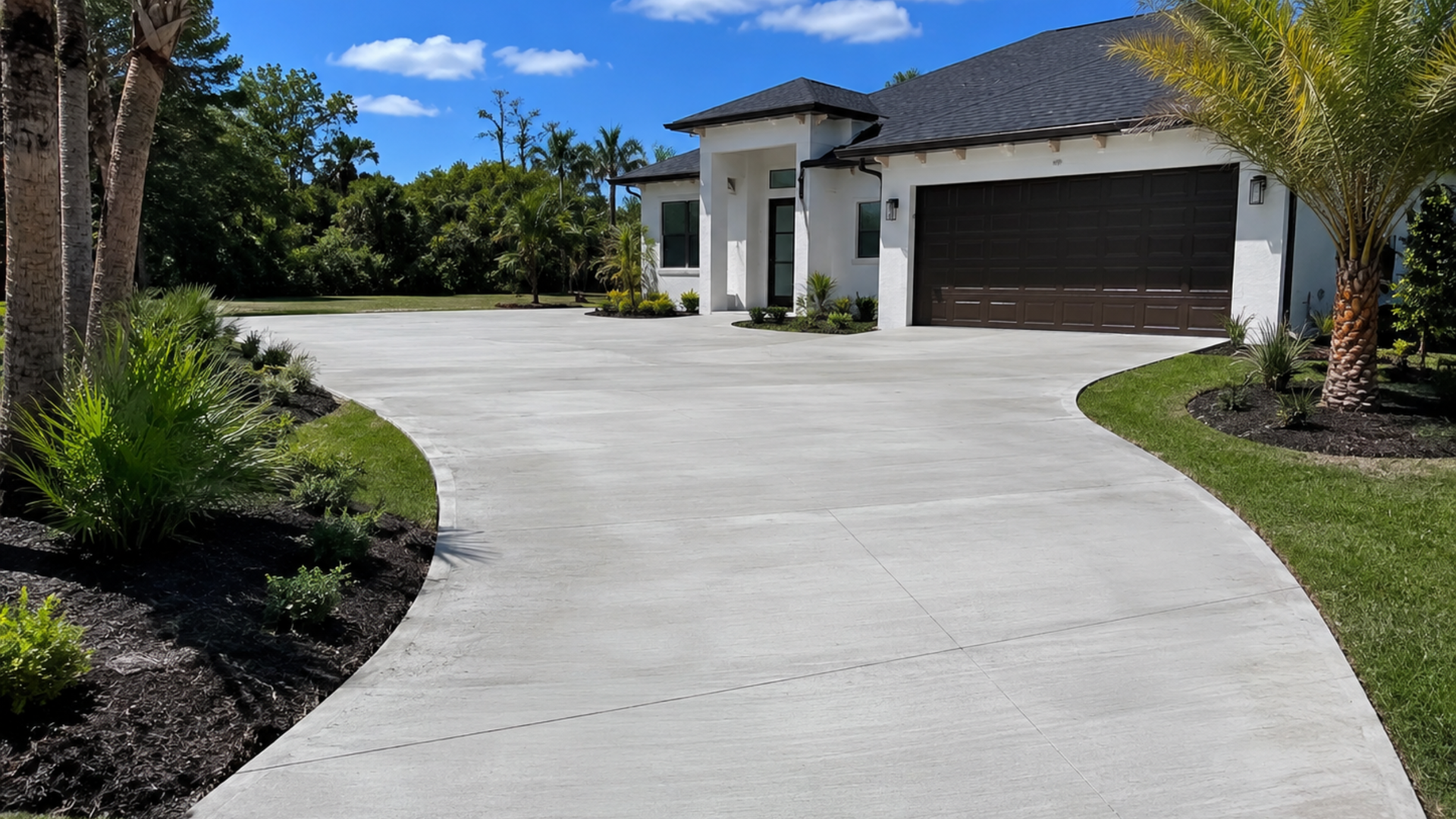
Connect them with walkways. Poured sidewalks and walkways that match your patio finish link the driveway, front entry, pool, and garden into a single designed path rather than a series of afterthoughts. This is one of the easiest ways to make a yard feel intentional and finished.
Give the pool deck its due. The concrete pool deck is often the largest and most used outdoor surface on the property, and it carries the most safety considerations. Texture for slip resistance and a cooler light color are worth prioritizing here. A pool deck poured and finished to match the adjoining patio makes the entire back of the home feel like one continuous outdoor living space.
Because most of these surfaces are slabs at heart, sound
concrete slab installation under every part of the layout is what keeps the finished design flat, stable, and crack resistant for the long run.
Outdoor Kitchens, Fire Features, and Shade for the Florida Lifestyle
The surface is the stage. These are the features that turn it into a room you actually live in.
Outdoor kitchens are a natural fit for a climate where you can cook outside nearly year round. A dedicated concrete slab or pad, poured level and to the right thickness, gives you a stable, durable base for grills, counters, and cabinetry. Planning the slab as part of the patio from the start is far cleaner than adding it later.
Fire features anchor an evening gathering space and stay useful on our cooler dry season nights. A built in fire pit or fireplace, set on a properly poured base, gives the lounge zone a focal point.
Shade is non negotiable here, and it changes how usable the space is. A pergola, an extended lanai roof, or a screen enclosure keeps the patio comfortable through the hottest and rainiest parts of the day, and the screen keeps Florida's insects at bay. Design the concrete footprint with these structures in mind so footings and post locations are planned, not retrofitted.
Designing a Concrete Patio for the Southwest Florida Climate
An outdoor space in Naples has to be designed for real conditions: strong sun, heavy summer rain, year round humidity, and near the coast, salt air. Good design accounts for all of it.
Manage the sun and heat
Surface color drives how hot a patio gets underfoot. Lighter tones and reflective sealers stay noticeably cooler in direct sun than dark colors, which matters most on pool decks and unshaded areas where bare feet are the norm. Pairing a lighter surface with planned shade makes the space usable at midday in July, not just at dawn and dusk.
Plan for water
Our summer downpours are intense, so a patio must be graded to drain away from the home and pool, never toward them. Proper slope and, where needed, drainage details keep water off the surface and protect the slab and your foundation. This is a design decision made before the pour, not a fix afterward.
Respect the coast.
Near the water in areas like Marco Island, salt air is tougher on materials. A quality sealer protects decorative concrete from salt and UV alike, which is one reason sealing and resealing matter more here than in milder inland climates.
Build it to last underneath
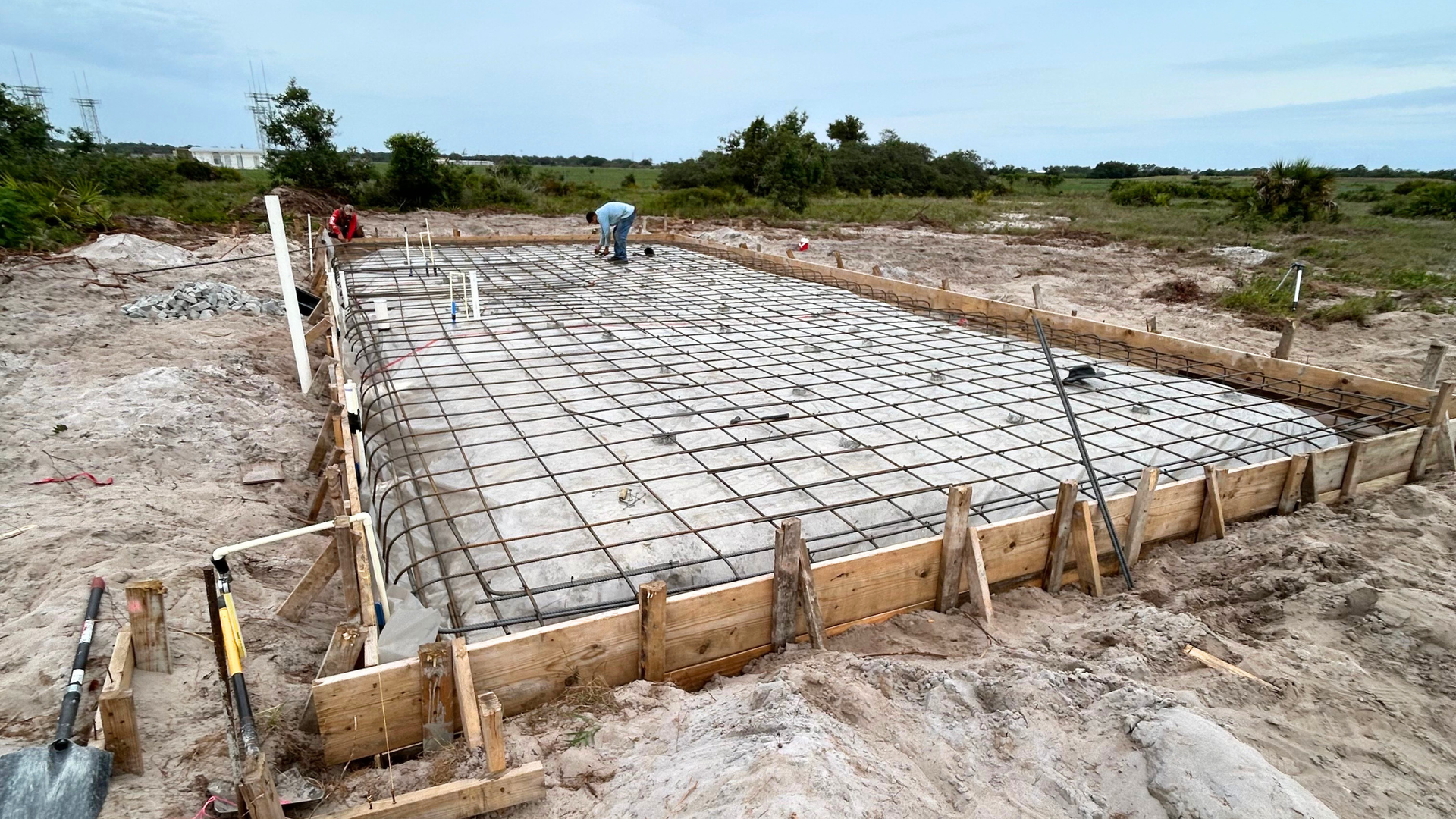
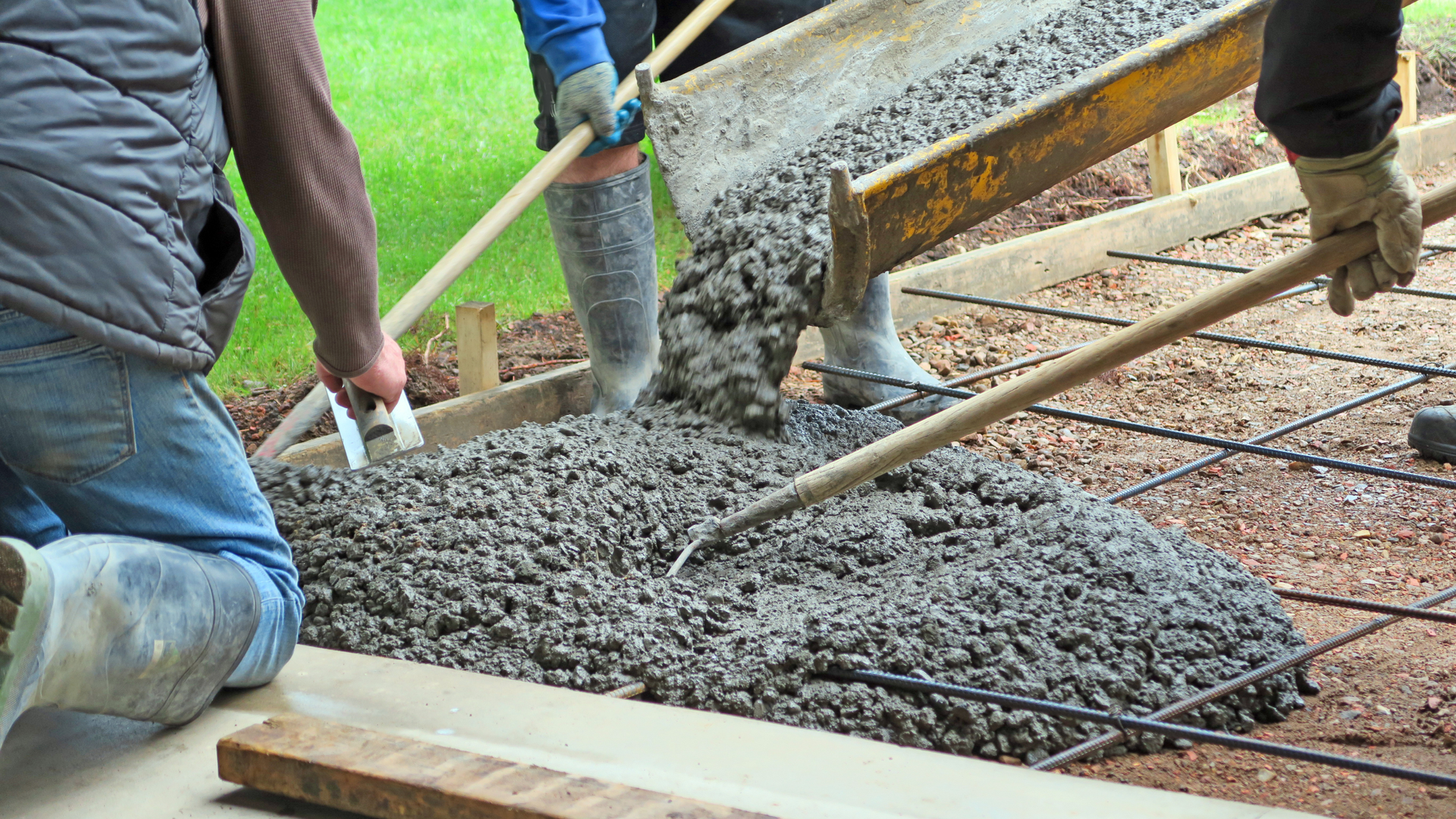
The prettiest finish still fails if the base is wrong. A well compacted subgrade, correct thickness, proper reinforcement, and well placed control joints are what keep a patio flat and crack resistant through our wet seasons and heat. Timing matters too, which is why our guide to the best time of year to pour concrete in Southwest Florida is worth a look when you start scheduling.
Color and Style: Matching Your Patio to a Coastal or Modern Home
Cohesion is what separates a patio that looks designed from one that looks added on. The surface should feel like it belongs to the house.
For coastal and Mediterranean homes, warm sand, shell, and travertine tones with stone or tile stamp patterns echo the classic Southwest Florida palette. For coastal modern and contemporary homes, cleaner lines, larger format patterns, and cooler grays or greiges pair well with crisp architecture. For a natural, tropical feel, earthy browns and exposed aggregate blend the patio into lush landscaping.
The reliable rule is to pull your patio colors from the home's existing palette, its roof, trim, stone, or pavers, so the outdoor space extends the house rather than competing with it. A good contractor will show you samples in your actual light before committing, since color reads differently under the bright Florida sun than it does on a sheet.

Planning and Budgeting Your Outdoor Living Project
Once the vision is taking shape, a few planning realities help you build smart.
Size and complexity drive cost more than anything. A larger footprint, multiple finishes, custom borders, and features like outdoor kitchens all add to the investment. A simple broom finish patio sits at the accessible end, while an expansive stamped pool deck with custom color and integrated features sits at the higher end. The finish you choose is the most controllable line item.
What is underneath is not the place to economize. Subgrade preparation, thickness, and reinforcement do not show in photos, but they determine whether your patio still looks right in fifteen years. The table below outlines the elements that shape a project so you can prioritize with eyes open.
| Planning Element | What to Consider |
|---|---|
| Size and layout | Total square footage and number of zones drive material and labor. |
| Finish selection | Broom is most economical, stamped and custom color cost more. |
| Base and reinforcement | Do not cut here. Determines longevity and crack resistance. |
| Features | Outdoor kitchen pads, fire features, and footings add scope. |
| Drainage and grading | Essential in our rainy climate, plan before the pour. |
| Sealing | Decorative finishes need periodic resealing to hold color and grip. |
| Timing | Dry season is ideal and books out, plan several weeks ahead. |
For a deeper look at how project pricing works on concrete flatwork generally, and how timing fits in, the seasonal guides linked above pair well with a direct conversation about your specific yard. When you are ready for real numbers, the fastest path is a site visit and a
request a free estimate.
Maintaining Decorative Concrete in a Humid, Sunny Climate
One reason concrete suits Southwest Florida is that upkeep is simple, though decorative surfaces do ask for a little care to stay beautiful.
Rinse and clean regularly. Hosing off debris and the occasional wash keeps mildew, which loves our humidity, from taking hold. Reseal on a cycle. Decorative and stamped surfaces should be resealed roughly every two to three years, depending on sun exposure and traffic, to protect the color and maintain slip resistance. This is the single most important maintenance task for a decorative patio here.
Address stains promptly and watch your drainage. Wiping spills before they set and keeping downspouts and sprinklers from pooling water at the edges both extend the life and look of the surface. None of this is demanding, and a sealed decorative patio that gets basic attention will hold its appearance for many years of hard Florida use.
Frequently Asked Questions
What is the best concrete finish for a patio in Southwest Florida?
There is no single best finish, but the strongest local choices balance looks with slip resistance and heat performance. Broom finish and textured stamped concrete grip well around wet pool areas, lighter integral colors stay cooler underfoot in direct sun, and exposed aggregate is durable and naturally slip resistant. The right pick depends on how the space is used and how much sun it gets, which is worth discussing with your contractor before the pour.
Is stamped concrete a good choice for a patio or pool deck in Florida?
Yes. Stamped concrete gives the look of stone, brick, or wood plank in one durable pour with fewer joints than pavers, which is why it is so popular here. For pool decks, a textured stamp pattern and a slip resistant sealer are important for safety, and sealing protects the color from intense UV and salt air near the coast.
How long does a concrete patio last in Florida?
A properly installed concrete patio can last for decades. Longevity comes down to a well compacted subgrade, correct thickness and reinforcement, proper control joints, and good drainage. Decorative surfaces need resealing every two to three years or so to keep color and protection strong, but the concrete itself outlasts the sealer many times over.
Can a concrete patio handle the Florida heat and sun?
Yes, and design choices affect comfort. Concrete handles heat well structurally, but surface temperature underfoot depends on color and finish. Lighter colors and reflective sealers stay cooler in direct sun, while shade from a pergola, lanai, or screen enclosure keeps the space usable through the hottest part of the day.
Which is better for a patio, stamped concrete or pavers?
Both work well here, and the right answer depends on priorities. Stamped concrete is a continuous pour with fewer joints, meaning fewer gaps for weeds and less shifting, and it often installs for less than pavers over the same area. Pavers can be lifted and replaced individually. For a large, cohesive, low maintenance outdoor surface, many homeowners choose stamped or decorative concrete.
Does a concrete patio add value to a home in Naples, FL?
Generally yes. In a market where outdoor living is central, a well designed patio, pool deck, or lanai extends usable living space and adds curb and resale appeal. Decorative finishes that complement the home's architecture tend to add the most perceived value, and quality of installation matters more than square footage alone.
Bring Your Southwest Florida Outdoor Living Vision to Life
A concrete patio is the foundation of the outdoor living space most Southwest Florida homeowners really want, and the design possibilities are far wider than a plain slab suggests. Whether you picture a stamped stone pool deck, a warm colored lounge area around a fire feature, or a cohesive layout that ties the whole yard together, concrete can get you there, and get you there in a way that stands up to our sun, rain, and salt air.
The best projects start with a clear vision and a builder who understands both design and how concrete performs in this specific climate. If you have ideas taking shape, the next step is talking through your yard, your home's style, and how you want to use the space.
Regency Construction Group serves Naples, North Naples, Marco Island, Golden Gate, Bonita Springs, Estero, Fort Myers, and Cape Coral, with over 20 years of combined experience and the owner present on every job site. Let us help you design and build an outdoor living space you will actually live in.
Request a free estimate and let us walk your yard with you.