Do You Need a Permit for Concrete Work in Naples, FL?
Planning a new driveway, a patio extension, or a fresh slab somewhere on your property? Before you schedule the truck, there is one question worth answering first: do you need a concrete permit in Naples? For most projects the answer is yes, and getting it wrong can mean a stop work order, fines, or tearing out finished work. The good news is that the rules are not complicated once you know two things: which projects require a permit, and which local office actually handles yours.
That second part trips up more Naples homeowners than anything else, because Naples is not a single permitting jurisdiction. This guide breaks down exactly when a permit is required for concrete work, when it might not be, who to file with depending on where you live, and how the process works. By the end you will know precisely what your project needs.
The Short Answer, and Why It Depends on Where You Live
Most concrete work that changes the structure, footprint, or drainage of your property requires a building permit. That covers new driveways and driveway replacements, patios, structural slabs, foundations, pool decks, and retaining walls above a certain height. Small isolated repairs are often the exception. We will get into the specifics below.
The bigger surprise for many homeowners is that the office you file with depends on your exact address, not just your mailing city. Plenty of homes with a Naples mailing address are not actually inside the City of Naples at all. They sit in unincorporated Collier County, which has its own separate building department and its own process. Filing with the wrong office, or assuming city rules apply when county rules do, is a common and avoidable mistake. So before anything else, figure out which Naples you are in.
First, Find Out Which Naples You Are In
The word Naples describes both an incorporated city and a much larger surrounding area of unincorporated Collier County, plus nearby jurisdictions like Marco Island. Each has its own building department, its own portal, and its own fees. Your project follows the rules of whichever one your property physically sits in.
City of Naples
If your property is inside the incorporated City of Naples, the City of Naples Building Department handles your permit. The city enforces the Florida Building Code with additional local, coastal, and flood requirements, and it runs its own electronic permitting portal. This is the smaller of the two areas geographically, generally covering the older coastal core of Naples.
Unincorporated Collier County
If you have a Naples mailing address but live outside the city limits, which is the case for a large share of homes across the region, your permits go through Collier County's Growth Management Community Development Department. The county issues permits through its own online portal for unincorporated areas and applies the Florida Building Code along with the Collier County Land Development Code.
The fastest way to know for certain is to look up your property by address or folio number on the
Collier County Property Appraiser website, which shows your jurisdiction. When you hire a licensed local contractor, this is one of the first things they confirm, because everything else follows from it. The table below sums up the split.
| If your property is in... | Your permit office is... | Contact |
|---|---|---|
| City of Naples (incorporated) | City of Naples Building Department | 239-213-5020 |
| Unincorporated Collier County | Collier County Growth Management (GMCD) | 239-252-2400 |
| Marco Island | City of Marco Island Building Services | Separate department |
| Not sure | Check the Collier County Property Appraiser site | Confirm by folio number |
When You Do Need a Permit for Concrete Work
Across both the city and the county, the same general principle applies: if the work affects the structure of a building, the footprint of your property, or how water drains, it almost certainly needs a permit. For concrete specifically, that includes most of the projects homeowners actually hire out.
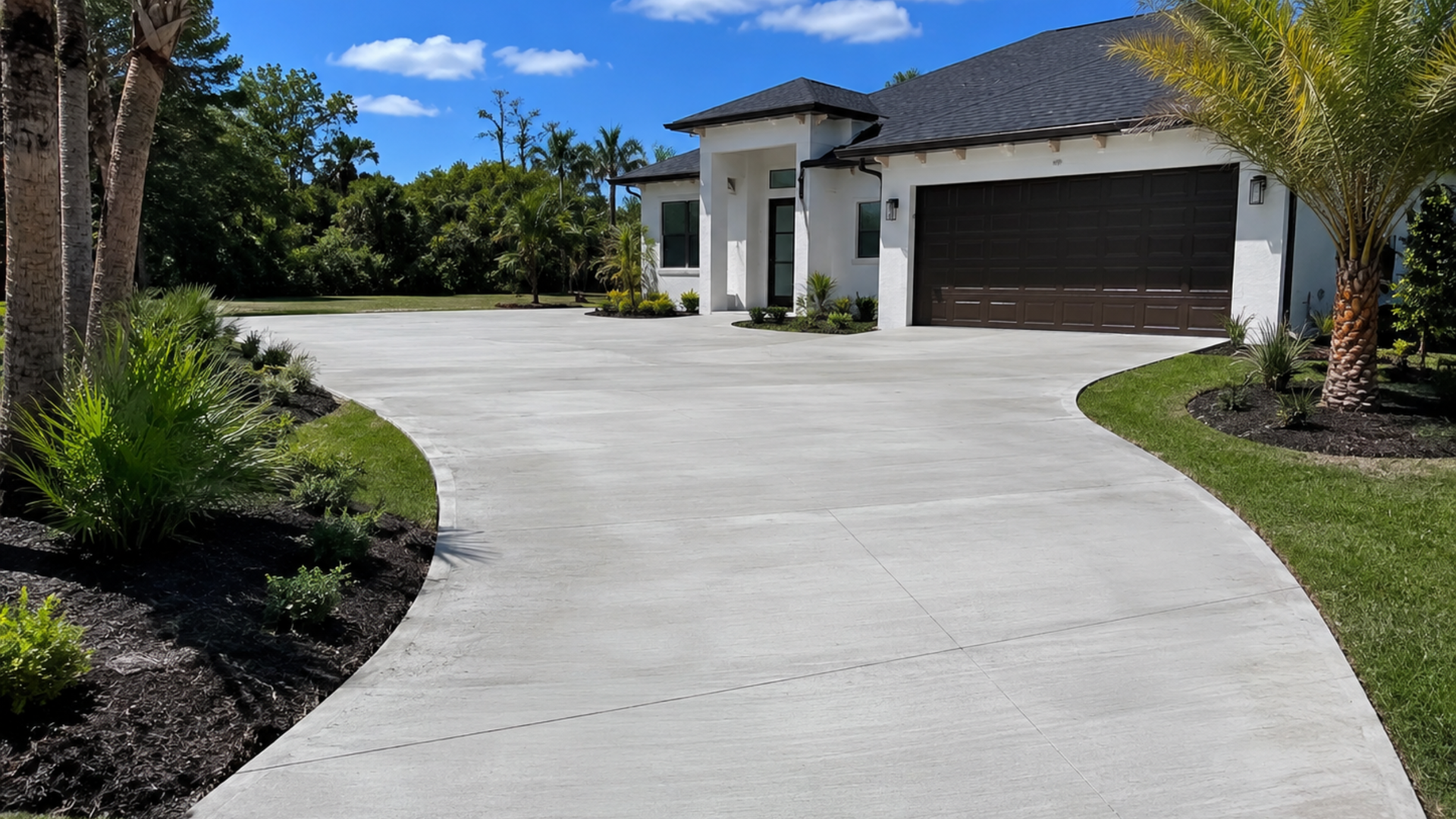
New driveways and driveway replacements are near the top of the list. A full replacement is not treated as a simple repair, and because the driveway apron connects to the public street, it usually involves right of way review as well, which we cover in its own section below. Our guide to concrete driveway installation in Naples walks through what to expect on that kind of project.
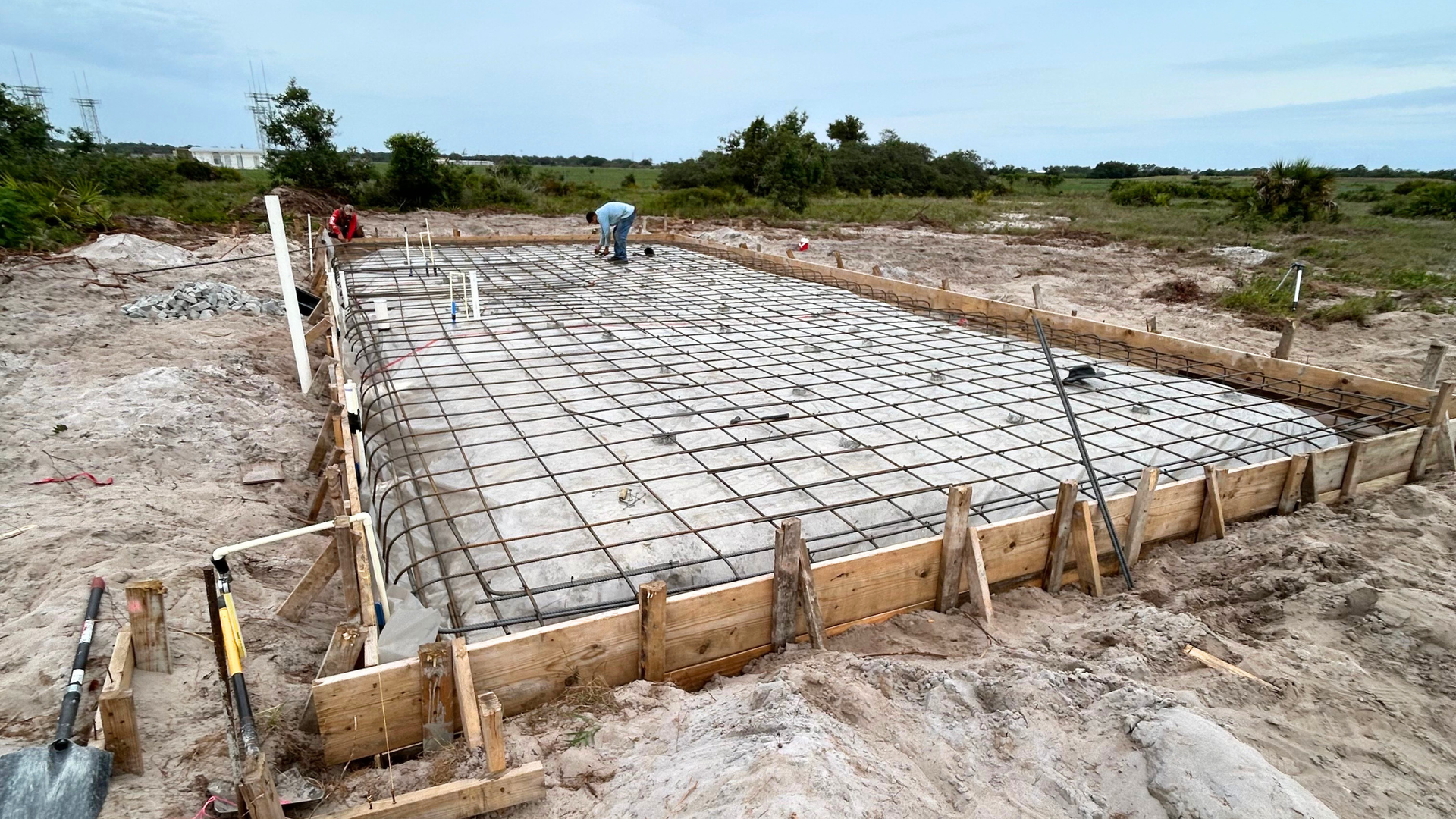
Patios, structural slabs, and foundations generally require permits too, particularly when they are attached to the home, exceed a size threshold, or carry structural loads. Pool decks attached to or surrounding a permitted pool are commonly permitted, and retaining walls above 30 inches in height from finished grade are a frequent trigger in Collier County. Anything that alters site drainage can pull in a stormwater review on top of the building permit.
The table below is a quick reference. Treat it as a starting point, since thresholds vary between jurisdictions and specific projects, not a substitute for confirming with your building department.
| Concrete Project | Permit Typically Needed? |
|---|---|
| New concrete driveway | Yes, plus right of way |
| Driveway replacement | Yes, plus right of way |
| Attached patio or slab | Usually yes |
| Concrete foundation | Yes |
| Pool deck around a permitted pool | Usually yes |
| Retaining wall over 30 inches | Yes (county) |
| Work that changes site drainage | Yes |
| Patching a small isolated crack | Often no, confirm |
| Minor surface repair, no structural change | Often no, confirm |
When You Might Not Need a Permit
Not every scoop of concrete requires a trip to the building department. There are two main situations where a permit may not be needed, though both come with caveats worth understanding.
Minor repairs
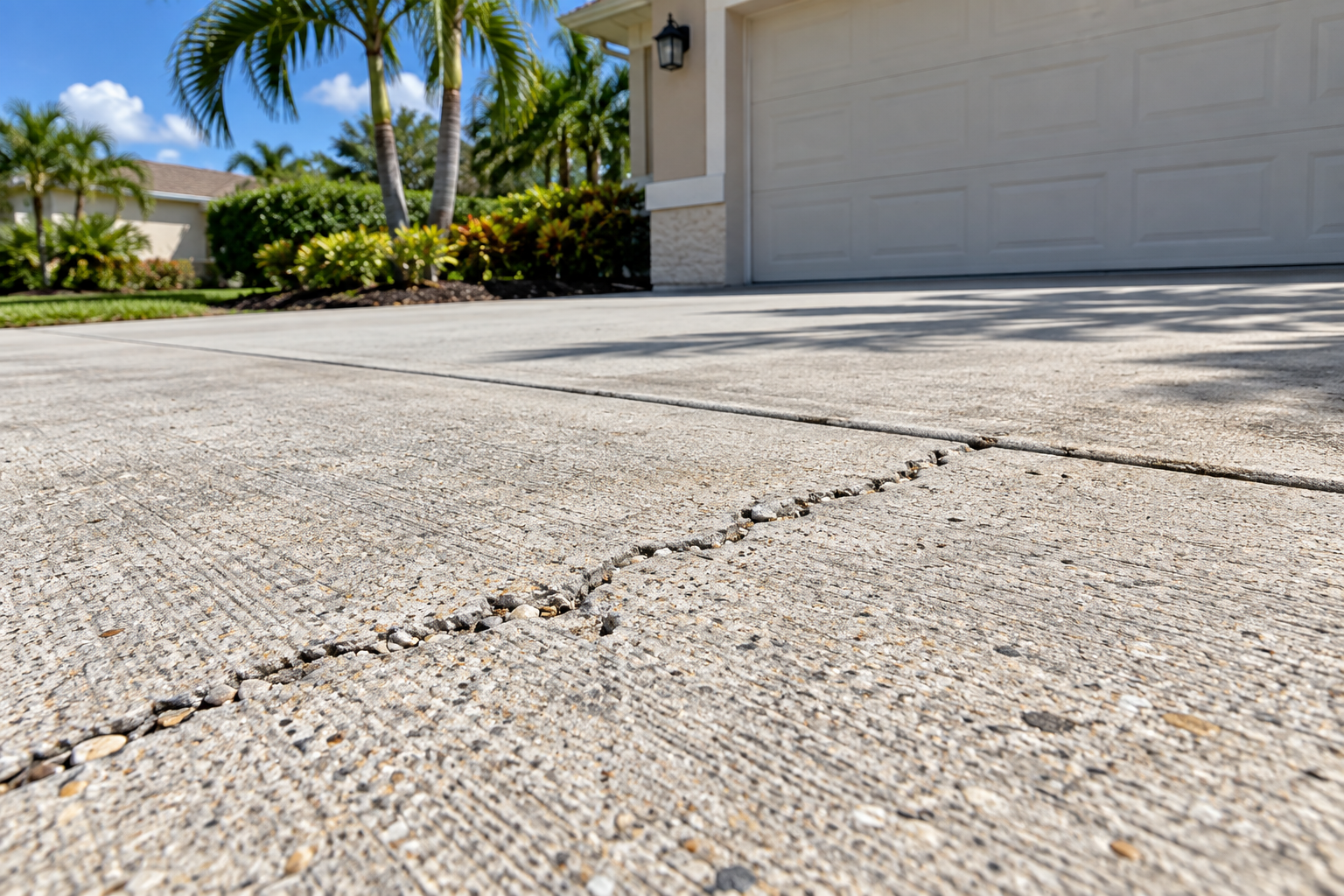
Small, isolated repairs that do not change the structure, drainage, or footprint often fall below the permit threshold. Patching a cracked section, filling isolated surface damage, or similar upkeep is commonly treated as maintenance rather than construction. Even so, the definition of minor varies, so a quick call to confirm before you start protects you from an expensive misunderstanding.
The new $7,500 exemption under HB 803
As of July 1, 2026, a Florida law known as HB 803 requires local governments to exempt certain single-family residential work valued under $7,500 from the building permit requirement. On paper that could cover some smaller concrete projects, but the limits are significant and easy to miss. The exemption does not apply if your property is in a flood hazard area, which describes much of coastal Naples and Collier County. It excludes structural, electrical, plumbing, mechanical, and gas work. You cannot divide a larger project into smaller pieces to slip under the $7,500 line. And you generally must submit a written exemption request with documentation of the work and its value.
In practice, that means many Naples concrete projects still need a permit even under the new law, especially anything structural or anything on a coastal or flood-zone lot. And separately, right of way work on a driveway apron is still handled through its own process regardless of the exemption. When in doubt, confirm eligibility before you rely on it.
Your Driveway Apron and the Public Right of Way
Here is a detail that surprises a lot of homeowners. The strip of driveway between your property line and the street, the apron, usually sits in the public right of way, which is land the city or county controls even though it runs across the front of your lot. Work there is governed separately from the rest of your driveway.
That means a driveway project can involve two approvals: the building permit for the portion on your property, and a right of way permit for the apron. In the City of Naples, the right of way permit carries its own construction standards, including a minimum concrete thickness and conformance with state road construction specifications, along with its own fee based on the area of right of way involved. The permittee also takes on responsibility for the work meeting those standards.
None of this is a reason to avoid the project. It is a reason to plan for it. A contractor who works in the area regularly builds both approvals into the timeline from the start, so the apron does not become a last-minute surprise. This is one more argument for professional concrete driveway installation rather than a cash job that skips the paperwork.
Coastal, Flood, and Stormwater Rules That Add a Layer
Southwest Florida's location on the Gulf brings a few extra regulatory layers that inland communities never deal with, and they can affect a concrete project.
Flood hazard areas are the big one. Large parts of coastal Naples and Collier County sit in mapped Special Flood Hazard Areas. Property in these zones faces additional review, and as noted above, it is specifically carved out of the new HB 803 permit exemption. If your lot is in a flood zone, assume the standard permitting process applies.
Coastal construction adds another layer for beachfront and near-shore properties. Florida regulates construction seaward of the state's Coastal Construction Control Line through the Department of Environmental Protection, an approval that sits on top of local permitting. Most inland projects never touch this, but for waterfront lots it is worth asking about early.
Stormwater and drainage review can attach to larger projects in both jurisdictions. Because so much of the region's flatwork affects how rainwater moves across a site, a project that changes grading or drainage may require a drainage plan as part of the submittal. Given how much rain we get in the wet season, this review exists for good reason, and it is closely related to getting the best time of year to pour concrete in Southwest Florida right in the first place.
HOA Architectural Approval: The Other Layer
Even after you have satisfied the city or county, many Naples homeowners have one more box to check, and it has nothing to do with the government. A large share of communities across the area are deed-restricted, with homeowners associations and architectural review boards that must approve exterior changes before work begins.
An HOA approval is not a building permit, and a building permit is not HOA approval. They are two separate tracks, and you generally need both. An architectural review board may have its own rules on materials, colors, finishes, and layout, which matters especially for visible work like a concrete patios and outdoor designs project or a decorative driveway. Skipping this step can mean being ordered to undo compliant, permitted work simply because the association never signed off. Check your community's requirements in parallel with the permit process, not after.
What Happens If You Skip the Permit
It can be tempting to treat permitting as red tape, particularly if a contractor offers to do the job faster and cheaper without one. It is not worth it, for reasons that go well beyond the rules.
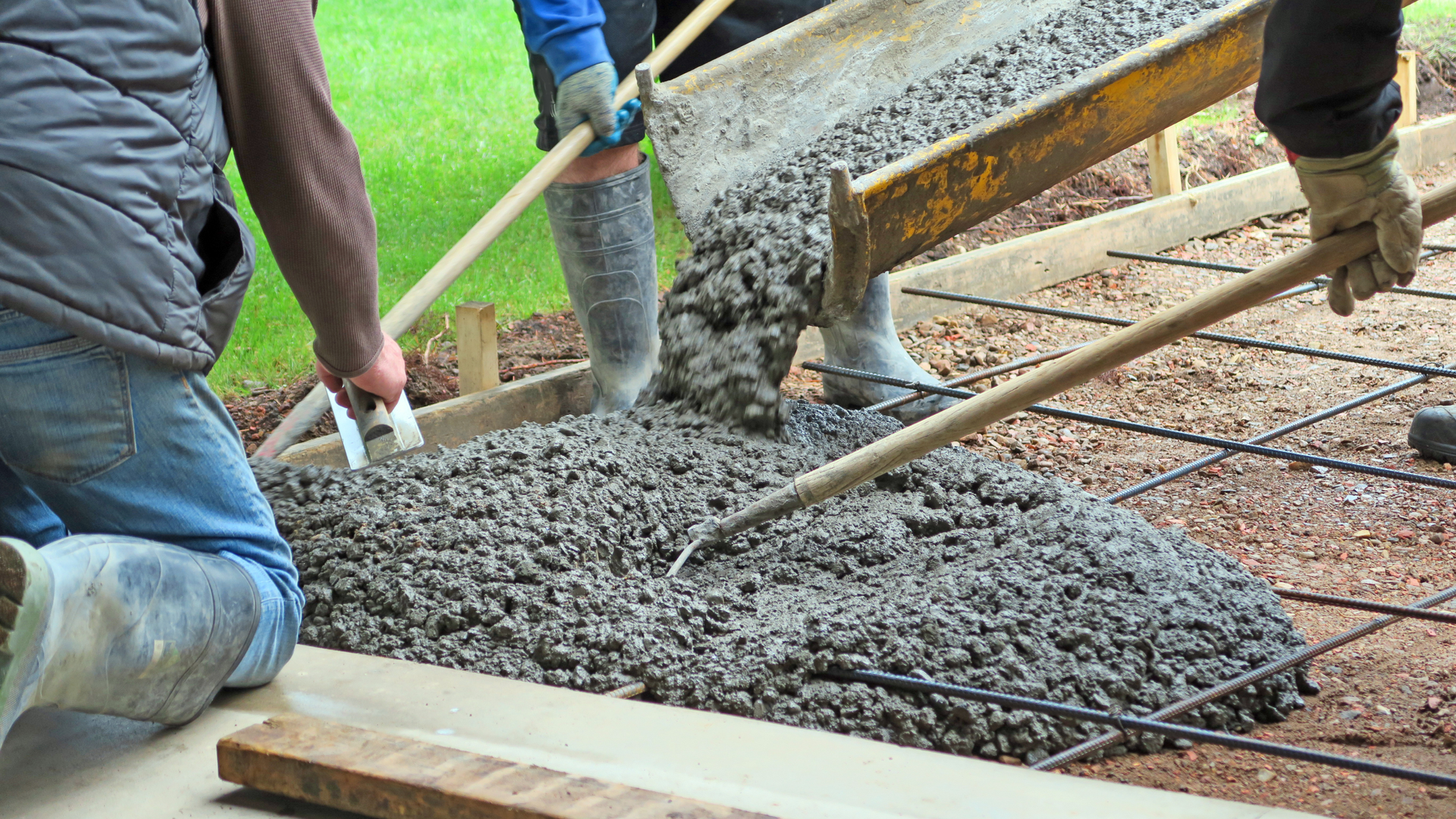
Unpermitted work can bring a stop work order that halts the project mid-pour. It can trigger fines, which in unincorporated Collier County can reach up to $1,000 per day for ongoing violations. It can lead to an order to remove and redo work that does not meet code, meaning you pay for the job twice. And it follows the home: unpermitted improvements frequently surface during a sale, when inspectors or title work flag them, forcing you to resolve the issue at the worst possible time and often at a premium.
A contractor willing to skip the permit is telling you something about how they work. The small upfront savings are dwarfed by the downstream cost when it goes wrong.
How the Permit Process Actually Works
For most homeowners, the simplest path is not to navigate any of this alone. A licensed local contractor handles the permitting as part of the project, and that is a large part of what you are hiring them for.
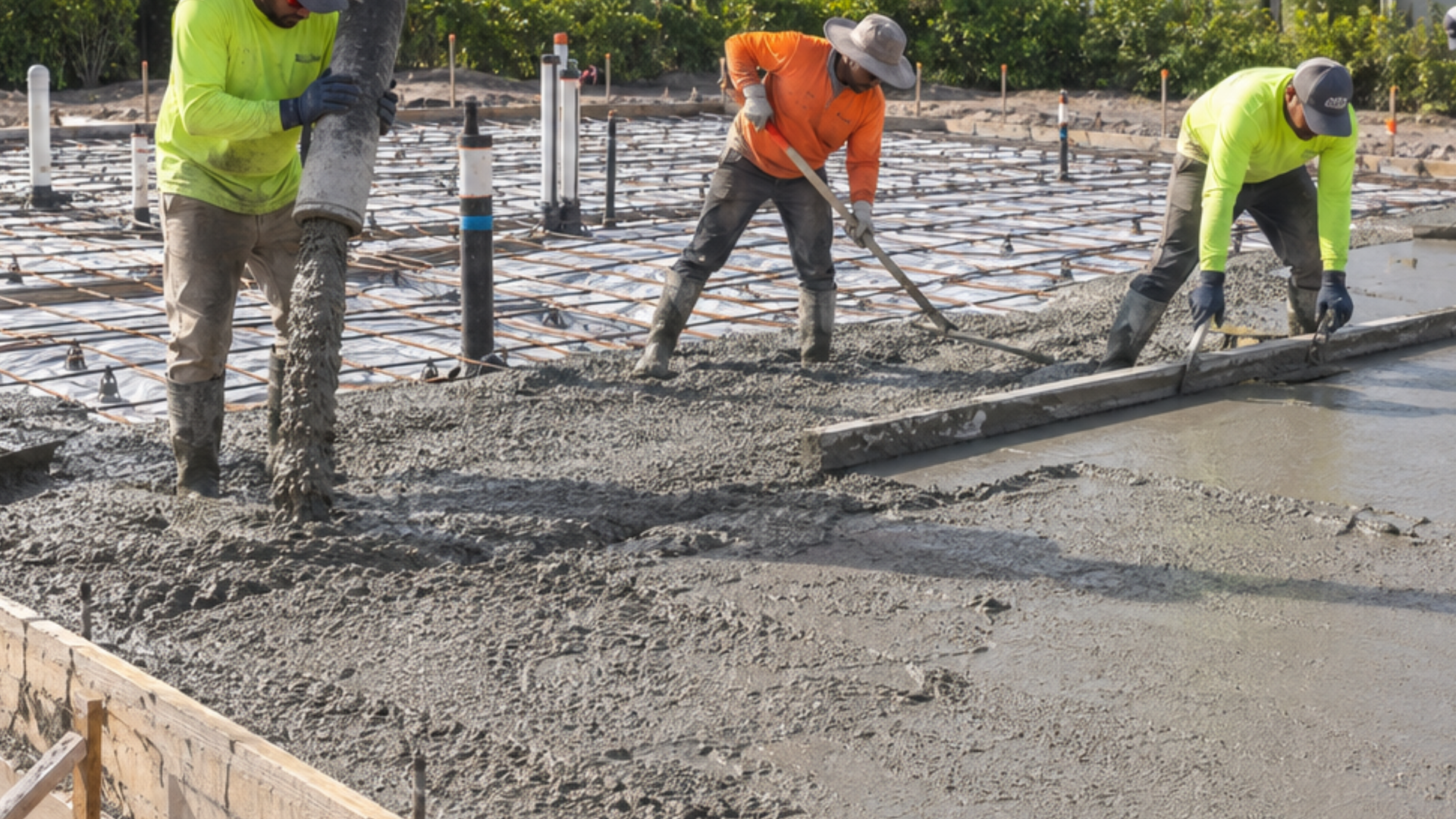
In practice, the contractor confirms which jurisdiction your property falls under, prepares and submits the application with the right documentation, pulls the building permit and any right of way permit the driveway needs, and schedules the inspections required to close the permit out properly. They know what the City of Naples asks for versus what Collier County asks for, which forms apply, and how to keep a project moving through review rather than stalled in it. For structural work like concrete foundations and concrete slab installation, that experience is not a luxury, it is what keeps the project compliant and on schedule.
That is the real value of working with an established local team. You get the concrete you wanted, done to code, with the paperwork handled correctly the first time.
Frequently Asked Questions
Do you need a permit for concrete work in Naples, FL?
In most cases, yes. New driveways, replacements, patios, slabs, foundations, pool decks, and any work affecting drainage or structure generally require a permit. Small isolated repairs may fall below the threshold. Because rules depend on your exact location and project, confirm with the correct building department or work with a licensed contractor who pulls the permit for you.
Who issues concrete permits in Naples, the city or the county?
It depends on where your property sits. Inside the incorporated City of Naples, the City of Naples Building Department handles it. If you have a Naples mailing address but live in unincorporated Collier County, which is true for many homes, permits go through Collier County Growth Management. Marco Island has its own department. Check your address on the Collier County Property Appraiser site to be sure.
Do I need a permit to replace my concrete driveway in Naples?
Generally yes. Replacement typically requires a permit, and because the apron where the driveway meets the street sits in the public right of way, a separate right of way permit is often required as well. The City of Naples has a dedicated driveway permit with its own submittal and fee. Requirements differ between city and county, so confirm before scheduling.
Do I need a permit to repair or resurface existing concrete?
Often not, if it is a minor repair such as patching a small cracked section or filling isolated damage that does not change structure, drainage, or footprint. Larger resurfacing, replacement, or structural work usually does. Thresholds differ by jurisdiction, so it is worth a quick call before assuming a repair is exempt.
Does the new $7,500 permit exemption cover concrete work?
Sometimes, but with major limits. Under HB 803, effective July 1, 2026, single-family work under $7,500 can be exempt, but not if the property is in a flood hazard area, which covers much of coastal Naples, and not for structural work. You cannot split a project to stay under the limit, and you must submit a written exemption request. Right of way work is still handled separately. Confirm eligibility first.
What happens if I pour concrete without a required permit?
It can trigger a stop work order, fines that in unincorporated Collier County can reach up to $1,000 per day, and orders to remove and redo non-compliant work. It also causes problems at resale, when unpermitted improvements surface during inspection or title work. Permitting up front is far cheaper than fixing it later.
Does my contractor pull the permit, or do I?
A licensed concrete contractor typically pulls the permit as part of the job, prepares the submittals, and schedules inspections. Knowing which jurisdiction applies and what each department requires is a major reason to hire a licensed local contractor rather than an unlicensed one.
Get Your Concrete Project Done Right, and Permitted
So, do you need a permit for concrete work in Naples? For most real projects, yes, and the details depend on whether your property sits in the City of Naples, unincorporated Collier County, or a nearby jurisdiction, plus whether coastal, flood, or HOA rules apply. It is more manageable than it sounds, but it does reward getting the details right before the first pour.
The easiest way to handle all of it is to work with a licensed local contractor who knows the area's permitting inside and out and manages the process for you, from confirming your jurisdiction to closing out the final inspection.
Regency Construction Group serves Naples, North Naples, Marco Island, Golden Gate, Bonita Springs, Estero, Fort Myers, and Cape Coral, with over 20 years of combined experience and the owner present on every job site. We handle the permits, the standards, and the pour, so your project is done right and done by the book across all the areas we serve across Southwest Florida.
Request a free estimate and let us handle the details.
Disclaimer note for reader: Permit rules change and vary by property. This article is general information, not legal advice. Always confirm current requirements with the City of Naples Building Department or Collier County Growth Management for your specific project.