Concrete Walkways & Sidewalks in Naples, FL: Cost, Design & Permits
Upgrading a front entry path, side-yard walkway, or sidewalk can improve how people move around your property while giving the exterior a more finished appearance. If you are setting a renovation budget, understanding the average concrete walkway cost in Naples, FL can help you decide which size, finish, and design make sense before requesting estimates.
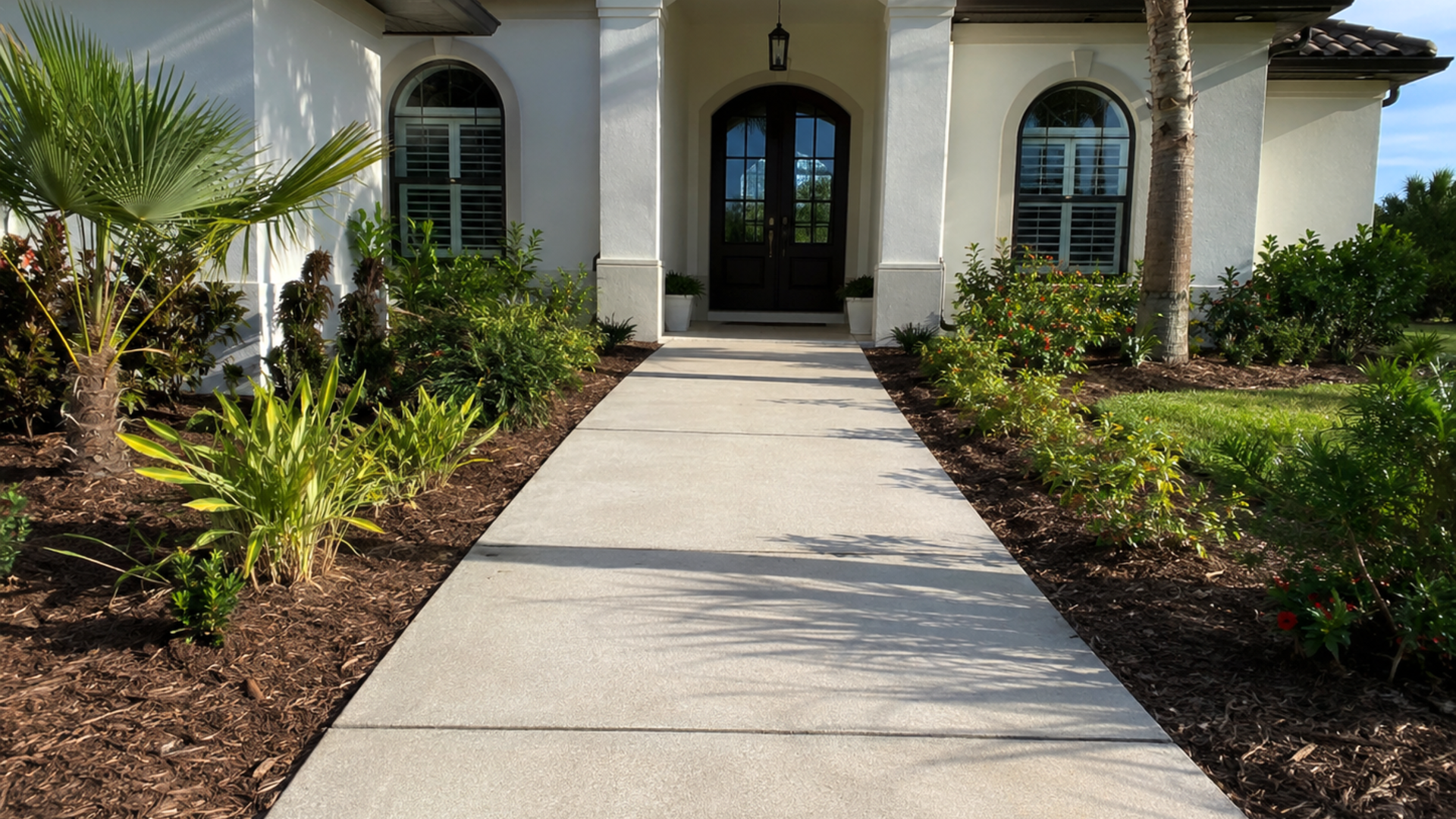
For a typical residential project, homeowners can use roughly $9 to $16 per square foot for standard broom-finished concrete as an early planning range. Decorative finishes such as exposed shell, colored concrete, or stamped concrete may range from roughly $12 to $25 or more per square foot, depending on the design and site conditions.
Those numbers are not fixed contractor quotes. Smaller walkways often cost more per square foot because excavation, equipment, concrete delivery, setup, and crew time still have to be covered even when the total square footage is limited.
In Naples, pricing can also change because of drainage work, removal of old concrete, sandy or disturbed soils, access around the home, decorative finishes, and permit requirements when work reaches the public right-of-way.
This guide explains those factors so you can plan a concrete walkway or sidewalk based on more than price alone.
How Much Does a Concrete Walkway Cost in Naples, FL?
The final cost depends heavily on the finish and how much preparation the site needs.
For early budgeting, these ranges are more useful than relying on one average number.
| Walkway Finish | Approximate Planning Range | Best For |
|---|---|---|
| Standard broom finish | $9–$16 per sq. ft. | Practical front, side, and backyard walkways |
| Colored concrete | $12–$20 per sq. ft. | Coordinating the walkway with the home exterior |
| Shell or exposed aggregate finish | $12–$20+ per sq. ft. | Coastal-style Naples properties and textured surfaces |
| Stamped concrete | $15–$25+ per sq. ft. | Decorative entry paths and higher-end landscape designs |
Actual estimates can fall above or below these ranges. Site access, demolition, project size, reinforcement, curves, grading, and concrete delivery all affect pricing.
A contractor should evaluate the property before giving you a final number.
Why Small Walkways Can Cost More Per Square Foot
Concrete pricing does not scale perfectly with square footage.
Consider a 100-square-foot front walkway. Even though it uses far less concrete than a driveway, the contractor may still need to:
- Bring a crew and equipment to the site
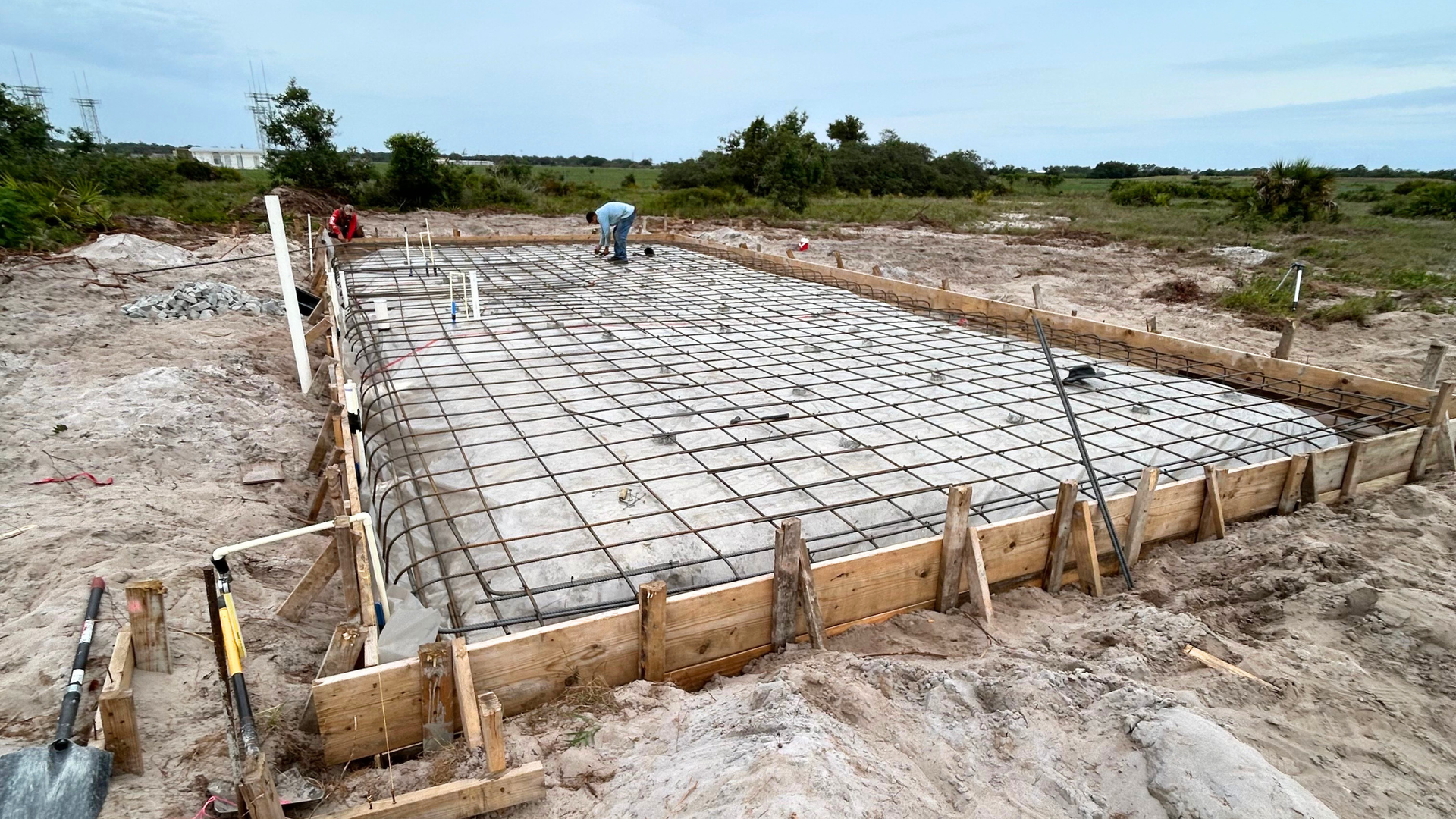
- Excavate and prepare the base
- Build forms
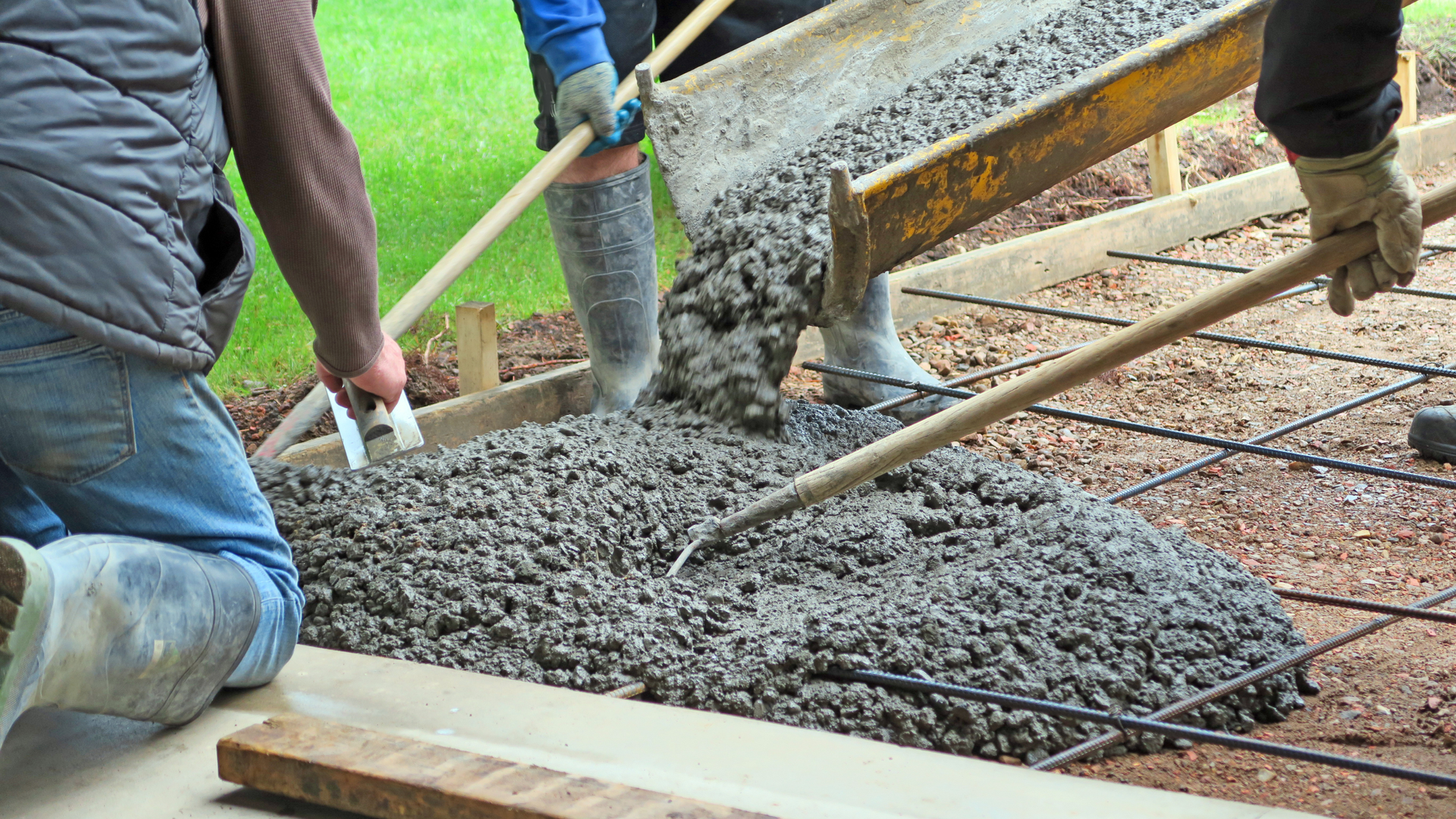
- Coordinate concrete delivery
- Pour and finish the slab
- Install joints
- Remove forms and clean the area
Those fixed costs are spread across fewer square feet.
That means a very small walkway may have a higher effective price per square foot than a larger project completed at the same property.
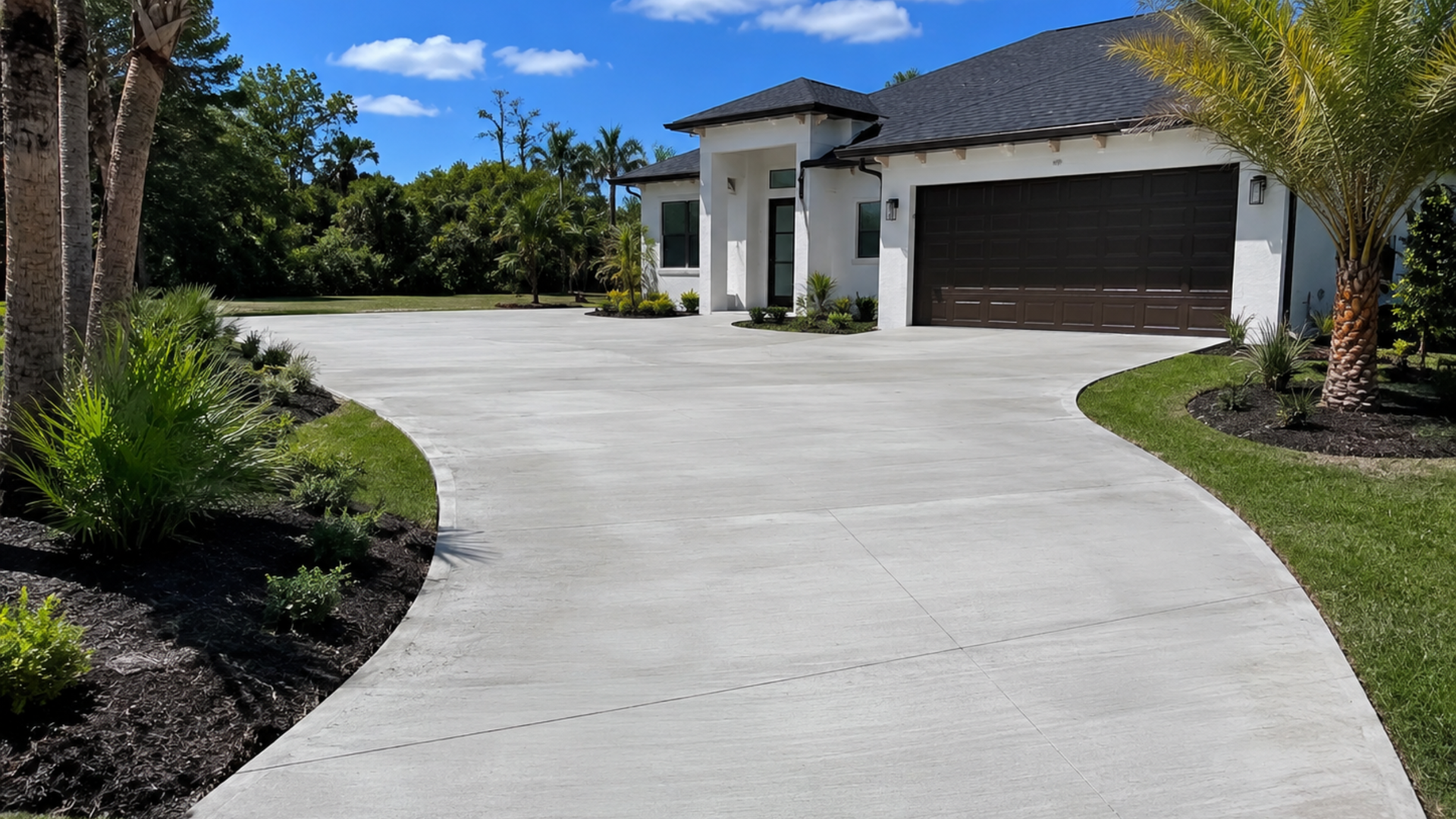
If you are already considering a driveway upgrade, it may be worth discussing both projects during the same estimate. Our guide to concrete driveway installation in Naples, FL explains the planning factors that apply to larger vehicle surfaces.
What Affects Concrete Walkway Cost in Naples?
Square footage is only the starting point.
Two walkways with the same dimensions can have very different costs depending on what is underneath them and how complicated they are to install.
Existing Concrete Removal
Replacing a damaged sidewalk costs more than pouring on a prepared new-construction site.
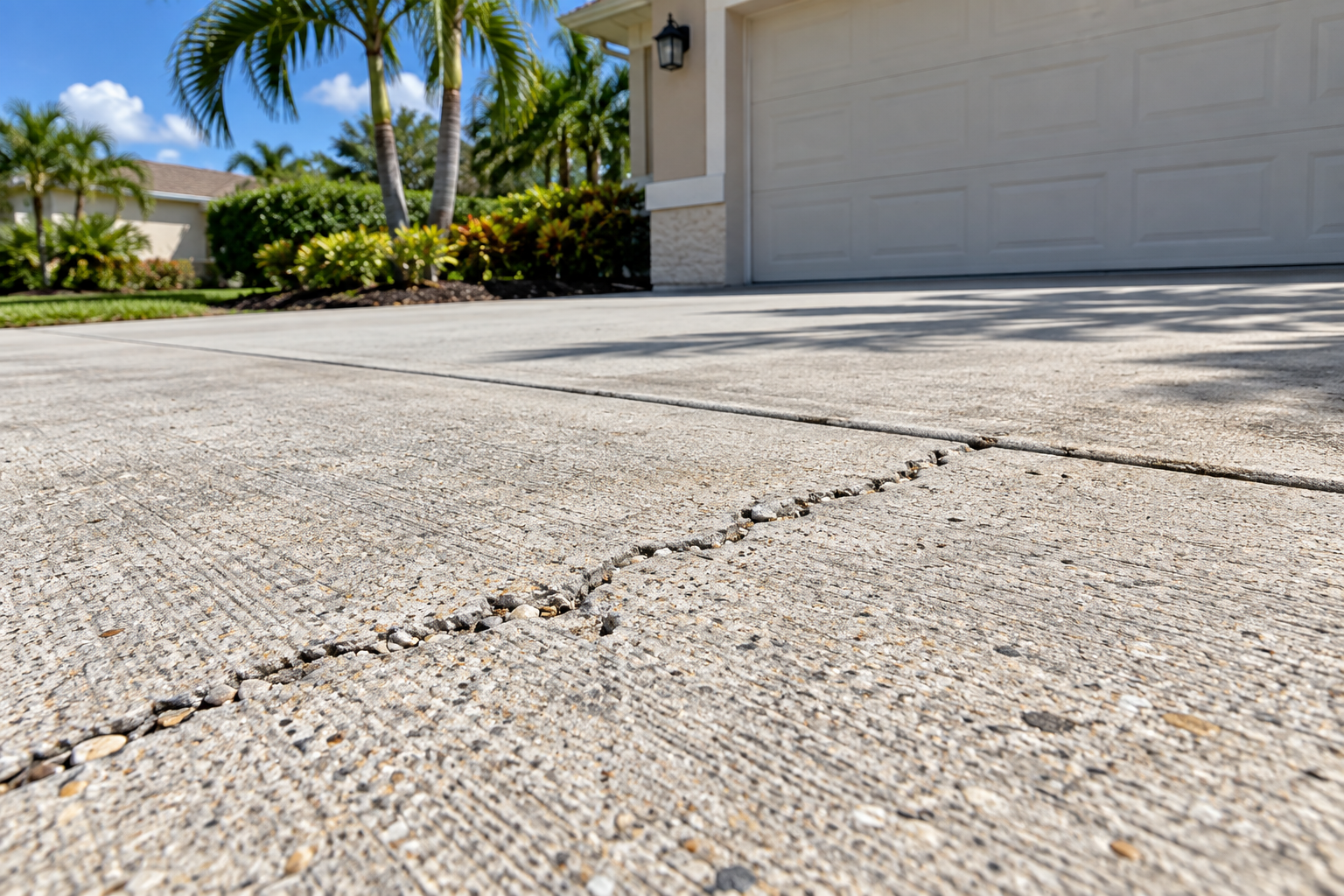
The contractor may need to break up the existing slab, remove the pieces, haul away debris, and regrade the area before installing new concrete.
Removal becomes more involved when the old walkway is:
- Thick or reinforced
- Difficult to reach with equipment
- Close to landscaping or structures
- Connected to other concrete that needs to remain
The condition underneath the old concrete also matters. Removing the slab may expose settlement, washed-out material, roots, or drainage problems that should be corrected before the new walkway is poured.
Excavation and Subgrade Preparation
The finished concrete is only as reliable as the ground supporting it.
Many Southwest Florida properties contain sandy soils or areas of placed fill. Sandy material can drain well, but loose or disturbed material can still settle if it is not prepared correctly.
Heavy Florida rain can also move poorly compacted material underneath a slab.
Preparation may involve:
- Removing loose soil and organic material
- Excavating to the required depth
- Correcting soft areas
- Establishing the proper grade
- Adding suitable base material when needed
- Compacting the supporting surface before forming
Paying attention to the base helps reduce future settlement and uneven sections.
Walkway Shape
Straight walkways are usually more efficient to form and finish.
Curves, widened entrances, flared sections, steps, and custom borders take more time to lay out. They may also increase material waste and forming labor.
That does not mean you should avoid curves. A gently curved front walkway can work very well with Naples landscaping and larger front yards.
The design simply needs to justify the additional cost.
Thickness and Reinforcement
Most pedestrian concrete walkways are commonly built around a 4-inch slab, although the required design can vary by project.
Areas that will occasionally carry heavier loads or cross a driveway may require additional thickness or reinforcement.
Reinforcement may include welded wire mesh, reinforcing steel, or other methods selected for the project.
A contractor should determine these requirements based on intended use rather than simply applying the same specification to every walkway.
Site Access
A walkway along the side of a home may look simple but be difficult to reach.
Narrow gates, pool enclosures, landscaping, fences, air-conditioning equipment, and neighboring structures can limit equipment access.
If concrete must be moved farther by wheelbarrow, buggy, or pump rather than placed directly from the truck, labor can increase.
Drainage Corrections
Water should not sit against the home or collect in the middle of the walkway.
If the existing grade is poor, the project may require additional excavation or elevation adjustments before concrete installation.
Drainage work should be addressed before the pour. Fixing the slope after the walkway has hardened is much more difficult.
Which Concrete Walkway Finish Is Best for Naples?
The best walkway finish should balance appearance, traction, maintenance, and budget.
Naples homeowners have several useful options.
Broom-Finished Concrete
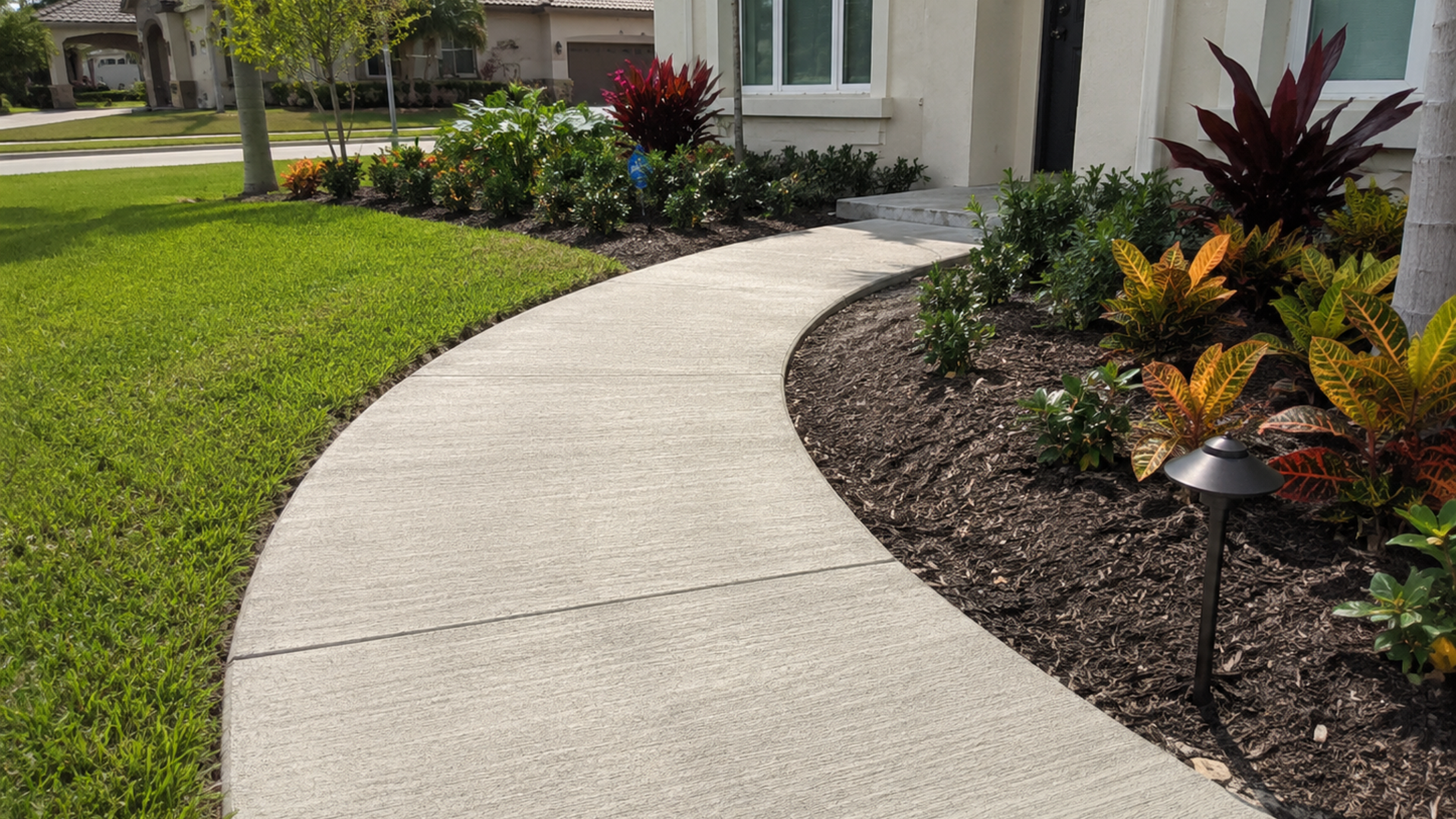
A broom finish is one of the most practical choices for an outdoor walkway.
After the concrete is leveled and finished, a broom is passed across the surface to create fine texture.
For many homes, it provides the best balance of:
- Cost
- Traction
- Simple appearance
- Low maintenance
- Reliable outdoor performance
The texture is particularly useful during Southwest Florida's rainy months because it provides more grip than a very smooth surface.
Broom-finished concrete also works well when the walkway is primarily functional rather than intended to become a major architectural feature.
Shell or Exposed Aggregate Concrete
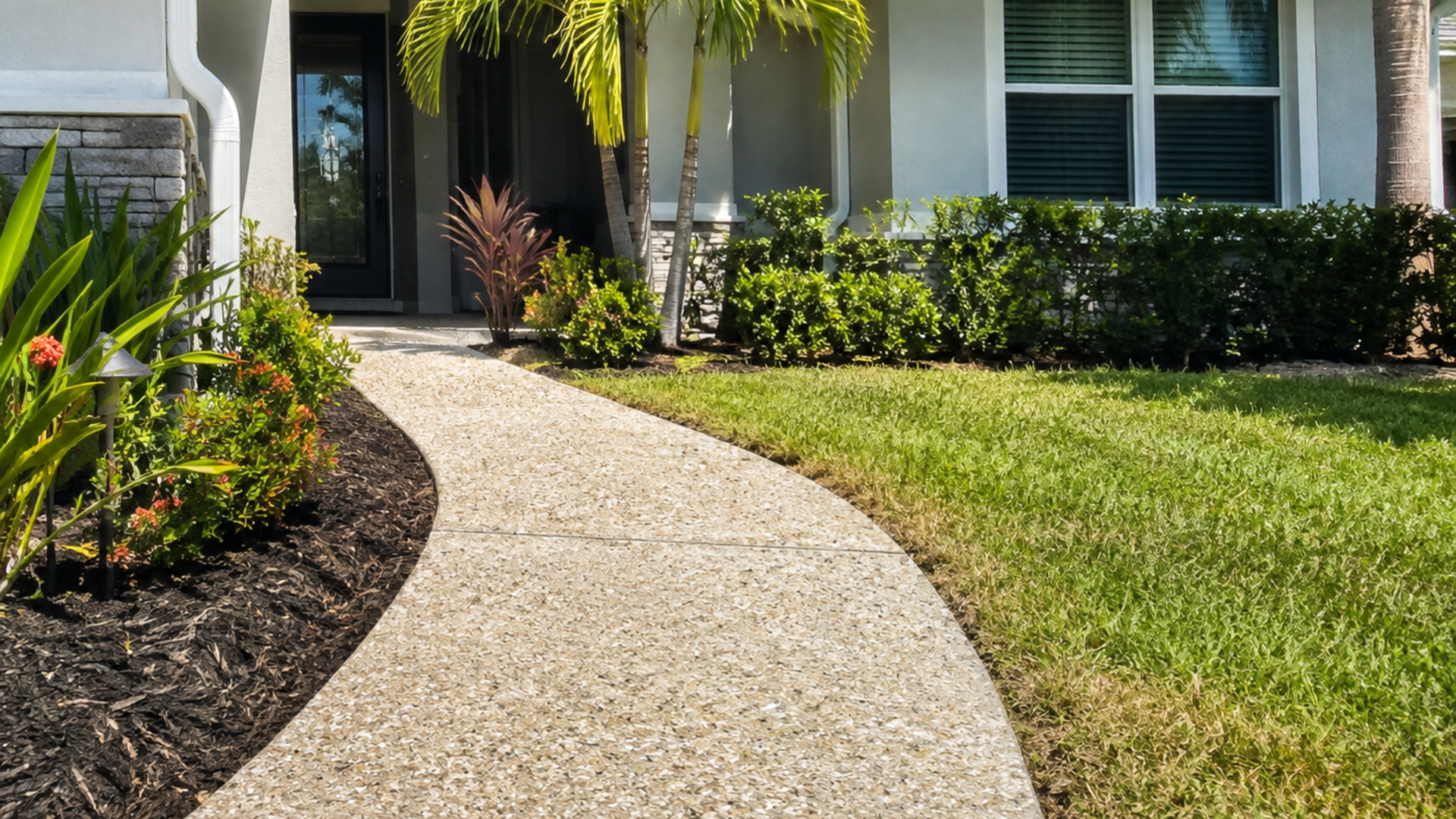
Shell finishes fit naturally with many coastal and Southwest Florida properties.
A shell-finish or exposed aggregate walkway reveals decorative material at the surface instead of leaving the concrete completely uniform. Depending on the selected mix and installation method, the surface may feature shell pieces, small stone, or a blend of aggregate.
This gives the walkway more texture and visual interest.
Advantages include:
- Coastal appearance
- Natural texture
- Better visual connection with tropical landscaping
- Less noticeable minor surface variation than completely plain concrete
The final appearance depends heavily on the aggregate blend and finishing method. Ask to see actual samples or completed projects before choosing the finish.
Because exposed finishes require additional labor and timing, they generally cost more than basic broom-finished concrete.
Stamped Concrete Walkways
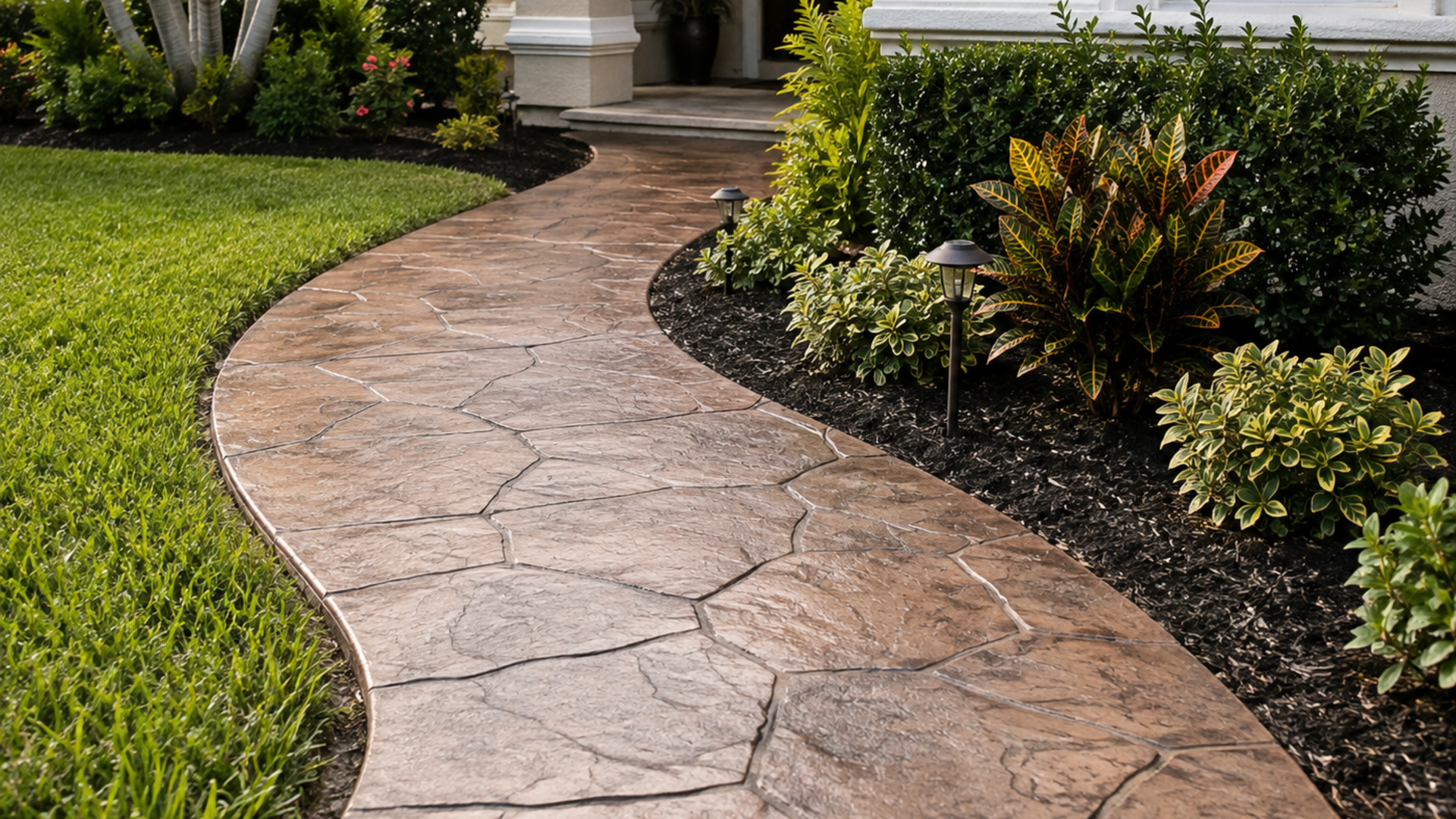
Stamped concrete is designed to mimic materials such as:
- Flagstone
- Slate
- Brick
- Natural stone
It works particularly well for front entry walks where the walkway is part of the home's curb appeal.
The tradeoff is cost and maintenance.
Stamping requires more labor during the pour, and decorative surfaces are usually sealed afterward. Over time, the sealer may need to be renewed to maintain the appearance.
For exterior stamped walkways, traction deserves special attention. High-gloss sealers can become slick when wet if the surface and sealer system are not selected correctly.
Ask about textured finishes or slip-resistant additives when planning decorative concrete in Naples.
Colored Concrete
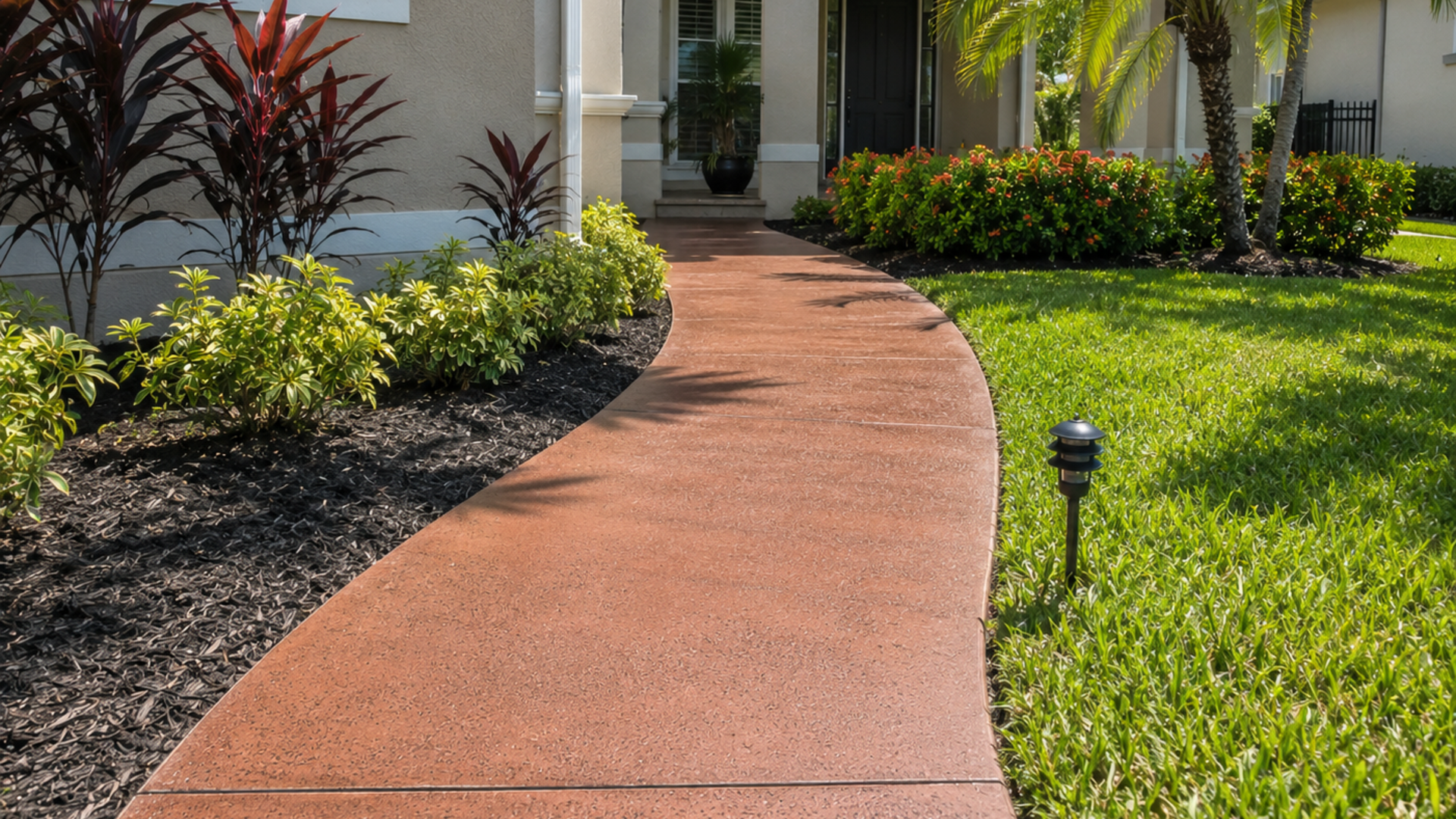
Concrete can also be colored without adding a stamped pattern.
Colored concrete works well when a homeowner wants something warmer or more coordinated with:
- Stucco
- Roofing
- Pavers
- Pool decks
- Existing patios
Earth tones, sand tones, and subtle grays tend to integrate easily with Southwest Florida home exteriors.
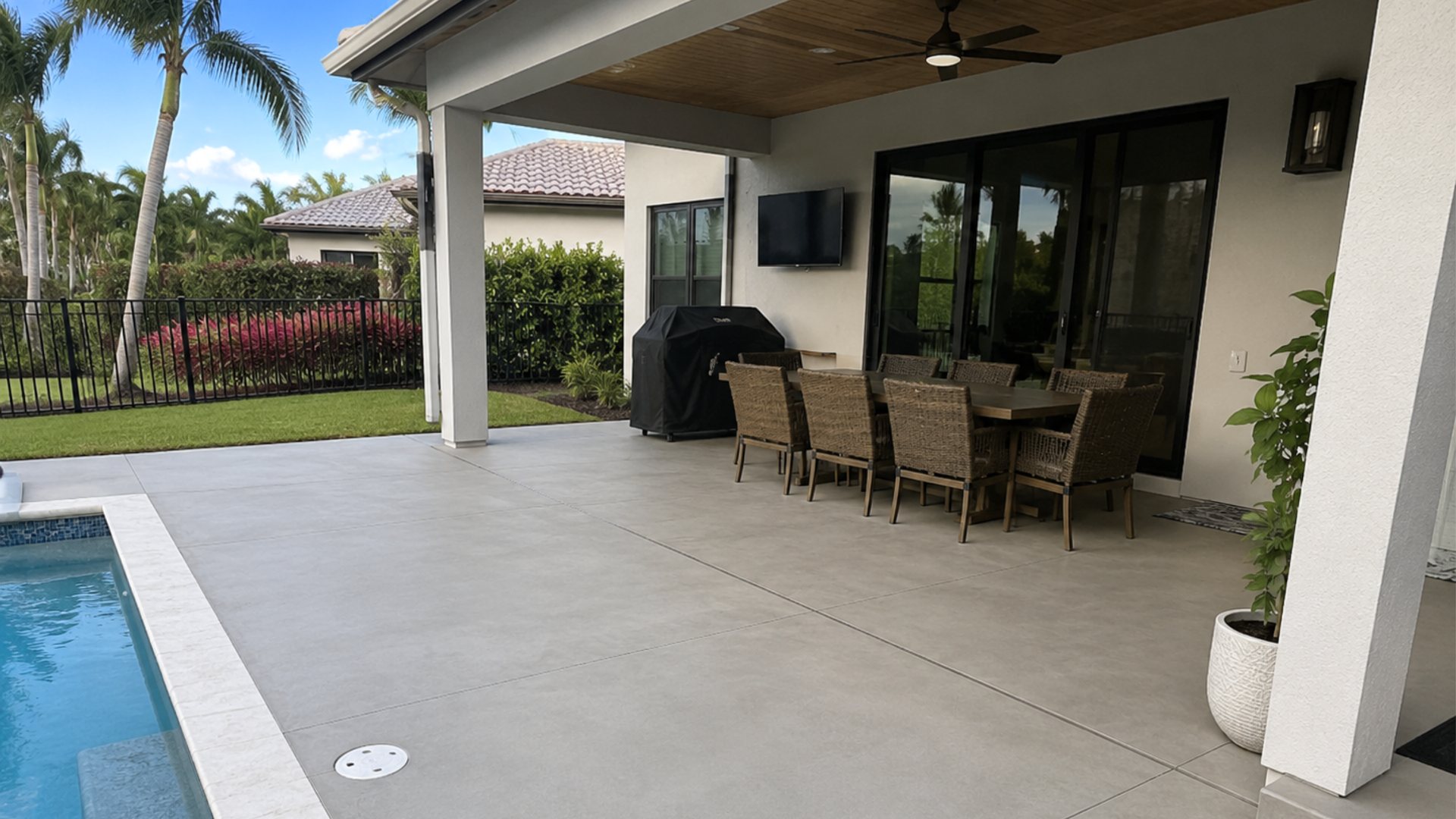
If your walkway connects to an outdoor living area, reviewing concrete patio ideas for Southwest Florida outdoor living can help you coordinate the materials rather than treating each surface separately.
Which Finish Provides the Best Traction During Florida Rain?
For outdoor walking surfaces, traction should be considered before appearance.
Naples receives periods of intense rain, which means an exterior walkway will regularly become wet.
Good Choices for Wet Conditions
Broom finish:
Provides consistent surface texture without requiring decorative treatment.
Exposed aggregate or shell finish:
Creates natural texture that can improve grip while adding visual interest.
Textured stamped concrete:
Can work well when the pattern, sealer, and traction additive are selected for outdoor use.
Be Careful With Very Smooth Finishes
A highly smooth trowel finish may look clean, but it is not usually the best choice for an uncovered residential walkway.
Likewise, decorative concrete should not be chosen based only on how it looks when dry.
Ask how the finish will perform:
- During heavy rain
- Around irrigation
- Near pool areas
- After sealing
- When algae or organic buildup develops
A good exterior finish needs to work in actual Florida conditions.
How Wide Should a Residential Concrete Walkway Be?
Width affects both function and appearance.
A narrow walkway may save concrete, but it can make the front entrance feel cramped.
| Width | Typical Use |
|---|---|
| 3 feet | Secondary or side-yard path |
| 4 feet | Comfortable residential walkway |
| 5 feet | Wider front entry or two-person traffic |
| 5+ feet | Larger entrances or properties with higher pedestrian use |
A 4-foot walkway is comfortable for many residential applications.
Front entrance paths often benefit from additional width, especially near the door. Flaring or widening the final section can make the entrance feel more natural without making the entire walkway oversized.
Public and commercial sidewalks may have separate accessibility and municipal requirements, so residential design dimensions should not automatically be used for those projects.
Straight or Curved Walkway: Which Is Better?
Neither layout is automatically better.
The choice should depend on the property.
- Straight Walkways Work Well When:
- The home has modern or symmetrical architecture
- The front door aligns directly with the driveway
- Space is limited
- Cost efficiency is a priority
- Curved Walkways Work Well When:
- Landscaping is part of the design
- The entrance is offset from the driveway
- The yard has more open space
- A softer, less formal appearance is preferred
Avoid adding curves just for decoration. Every bend should still provide a natural walking route.
People tend to take the shortest convenient path. If the walkway forces unnecessary detours, people may eventually cut across the grass instead.
Drainage Is Especially Important for Naples Walkways
Southwest Florida rainfall makes grading an important part of walkway planning.
The surface should shed water rather than trap it.
Before pouring concrete, the contractor should look at:
- Existing yard elevation
- Finished floor elevation
- Irrigation
- Roof runoff
- Downspouts
- Nearby driveway slope
- Landscape beds
- Drainage swales
The walkway should not unintentionally create a barrier that redirects stormwater toward the house.
This becomes particularly important when a walkway connects the driveway, front entry, and side yard. Small elevation changes across multiple concrete surfaces can change how water moves.
Concrete can be poured throughout the year in Naples, but weather affects scheduling and finishing. Our guide to the best time of year to pour concrete in Southwest Florida explains why crews approach summer pours differently from dry-season projects.
How Thick Should a Concrete Sidewalk Be in Naples?
For many private residential pedestrian walkways, a 4-inch slab is a common starting point.
Public sidewalks can be different.
Within the City of Naples, concrete sidewalks in the public right-of-way are generally required to be at least 4 inches thick. Where the sidewalk crosses a driveway or alley, City standards call for a 6-inch section.
That difference makes sense because the crossing area must support vehicle loads rather than pedestrian traffic alone.
The correct thickness for your property may also depend on:
- Soil and base conditions
- Intended use
- Existing municipal plans
- Location relative to the roadway
- Whether vehicles may cross the walkway
A professional concrete sidewalks and walkways in Naples contractor should review these factors before the project is priced.
Do You Need a Permit for a Concrete Walkway in Naples?
Sometimes.
The answer depends heavily on where the walkway is located.
Walkways Entirely on Private Property
A private walkway from your driveway to your front door may have different requirements from a public sidewalk.
Permit needs can depend on the scope of work, property conditions, and jurisdiction.
Homeowners should also check HOA or community architectural guidelines before selecting:
- Walkway location
- Concrete color
- Decorative finish
- Width
- Borders
Many Naples communities have design standards in addition to municipal requirements.
Work in the Public Right-of-Way
If construction enters the City of Naples public right-of-way or an easement, the permitting requirements become more specific.
The City requires a right-of-way permit for improvements and construction activity within public rights-of-way and easements.
That can apply to work involving sidewalks, driveway approaches, and other concrete located between private property and the roadway.
The City also maintains construction standards governing items such as:
- Concrete thickness
- Grades
- Sidewalk alignment
- Driveway crossings
- Joints
- Drainage
- Connections with existing infrastructure
Homeowners should not assume that a sidewalk near the street can simply be removed and repoured like a private backyard path.
City of Naples vs. Collier County
A Naples mailing address does not necessarily mean the property falls under City of Naples jurisdiction.
Properties outside the incorporated city may fall under Collier County requirements instead.
Before starting work, confirm:
- Which jurisdiction controls the property
- Whether the walkway enters public right-of-way
- Whether a permit is required
- Whether HOA approval applies
- Whether approved plans or inspections are required
This is one reason working with a contractor familiar with Naples and Collier County projects can simplify planning.
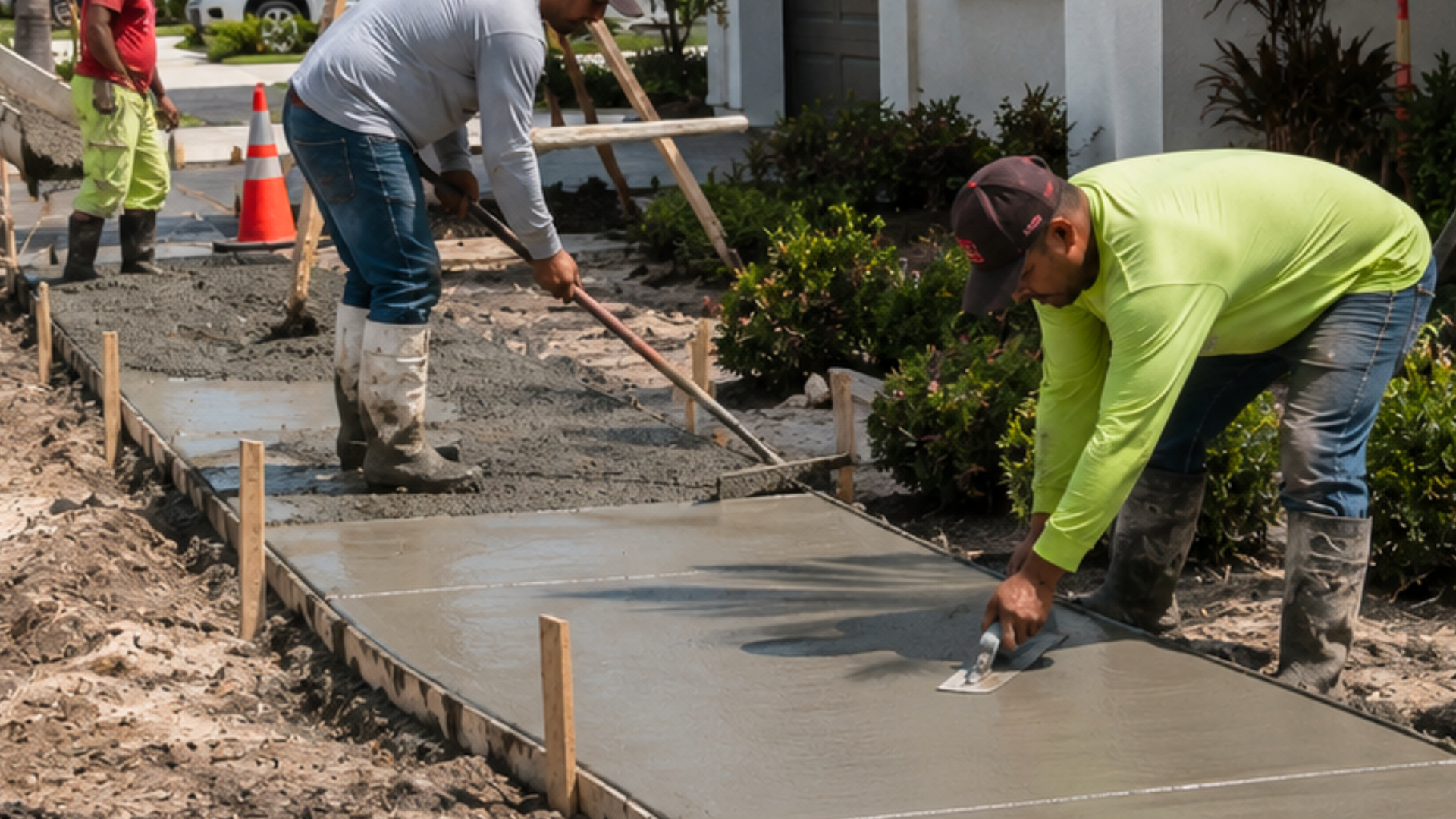
What Does Concrete Walkway Installation Include?
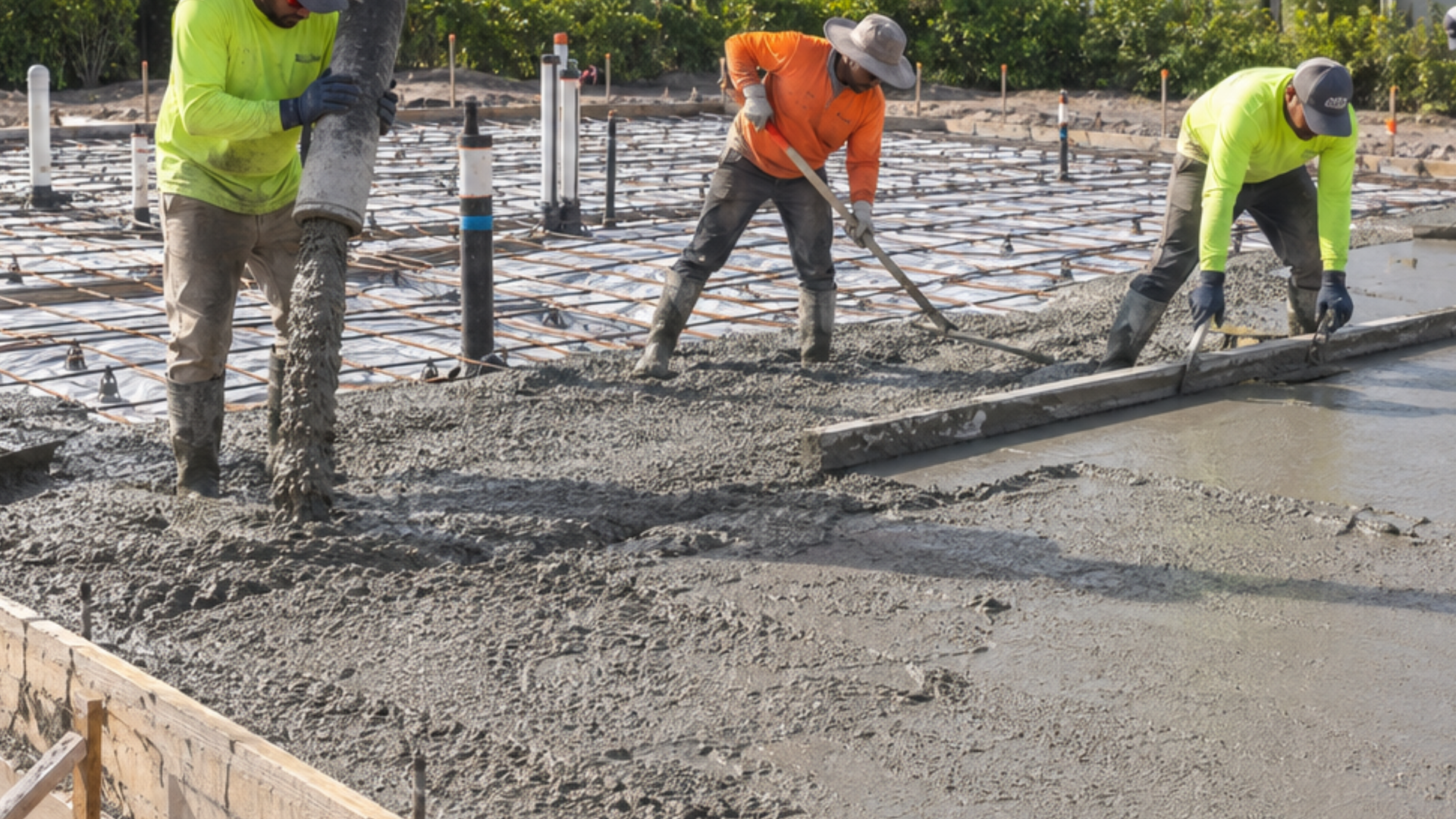
A professional installation usually follows a clear sequence.
1. Layout
The path is measured and marked based on the desired width, shape, elevations, and connections.
2. Excavation
Existing concrete, grass, soil, or other material is removed to create enough depth for the new slab and supporting base.
3. Subgrade and Base Preparation
Loose areas are corrected and the supporting material is graded and compacted.
4. Forming
Forms establish the walkway edges and final elevations.
5. Reinforcement
Reinforcement is installed when required by the design, location, or project specifications.
6. Concrete Placement
Concrete is placed, leveled, and worked to the correct elevation.
7. Finishing
The selected broom, shell, exposed aggregate, colored, or stamped finish is completed while the concrete remains workable.
8. Joint Installation
Control joints are placed to help manage normal shrinkage and cracking.
9. Curing
The concrete needs time to gain strength before normal use.
Each stage influences the final surface. Finishing cannot compensate for poor grading or a weak base underneath the slab.
Cost Factors and Hiring a Qualified Naples Concrete Contractor
When comparing estimates, do not compare only the final number.
Ask what is actually included.
A useful concrete walkway estimate should make the project scope clear, including items such as:
- Demolition
- Hauling and disposal
- Excavation
- Base preparation
- Concrete thickness
- Reinforcement when required
- Finish
- Joint installation
- Cleanup
- Permit coordination when applicable
A lower bid can become expensive if important preparation is excluded.
Also ask how the contractor plans to address drainage. The answer should relate to your actual property rather than a generic installation method.
Regency Construction Group serves homeowners, builders, and property owners across Naples and surrounding communities in Collier and Lee counties. You can review the areas we serve across Southwest Florida if your property is outside central Naples.
Frequently Asked Questions About Concrete Walkways in Naples
How much does a concrete walkway cost in Naples, FL?
A basic broom-finished concrete walkway can often be budgeted around $9 to $16 per square foot as an early planning range. Decorative shell, colored, or stamped finishes may cost roughly $12 to $25 or more per square foot. Small projects, difficult access, demolition, grading, and drainage work can increase the effective cost.
What is the cheapest concrete walkway finish?
A standard broom finish is typically the most affordable practical outdoor finish. It also provides useful traction, making it a strong option for Naples properties exposed to frequent rain.
What is the best concrete finish for a walkway in Florida?
Broom-finished concrete is a strong all-around choice because it is simple, durable, and textured. Exposed aggregate or shell finishes are also popular when homeowners want more visual interest. Decorative stamped concrete works well for entry paths but requires more maintenance.
How thick should a residential concrete walkway be?
Four inches is common for residential pedestrian walkways. Areas carrying vehicle loads or governed by public sidewalk standards may require thicker concrete. Within the City of Naples public right-of-way, sidewalks are generally at least 4 inches thick and increase to 6 inches at driveway and alley crossings.
Does a concrete walkway need reinforcement?
Not every walkway uses the same reinforcement. The need depends on the site, slab design, soil conditions, expected loads, and local specifications. Your contractor should recommend reinforcement based on the project rather than applying one rule to every walkway.
Do I need a permit to replace a sidewalk in Naples?
Permit requirements depend on the location and scope. Work within City of Naples public rights-of-way or easements requires right-of-way permitting. Properties in unincorporated Collier County follow separate county requirements. HOA approval may also apply in some communities.
Is stamped concrete slippery when it rains?
It can be if the surface is overly smooth or coated with a slick sealer. Outdoor stamped concrete should use an appropriate texture and sealer system. Slip-resistant additives can also be considered for surfaces exposed to frequent rain.
How long before I can walk on a new concrete walkway?
Light foot traffic is often possible after roughly 24 to 48 hours, but the exact timing depends on the mix, weather, finish, and curing method. Follow the contractor's instructions rather than judging readiness by whether the surface looks dry.
Plan Your Concrete Walkway With Regency Construction Group
A concrete walkway should do more than connect two areas of your property. The right layout should fit how people actually move through the space, direct water properly, provide reliable traction, and complement the home's exterior.
Cost depends on more than square footage. Finish selection, excavation, drainage, access, existing concrete removal, and permit requirements can all change the project scope.
Regency Construction Group installs concrete sidewalks and walkways for residential and commercial properties throughout Naples and surrounding Southwest Florida communities. Our team evaluates the site, layout, drainage, finish options, and project requirements before providing an estimate.
If you are planning a new walkway or replacing an existing sidewalk, request a free concrete estimate from Regency Construction Group to discuss your property and get project-specific pricing.